What happened
If you sat through the commute in Omaha on Tuesday morning and could not work out why the whole west side of the city had seized up, this is why: three separate crashes in the same stretch of Interstate 80, two of them overturned semis, closed every eastbound lane for roughly four and a half hours, and the closure did not lift until the commute was already underway.
Omaha police responded to the first crash just before 3 a.m. on eastbound I-80 near 84th Street. Shortly after 3 a.m. a semi overturned between 84th and 72nd streets. At about 3:55 a.m., a second semi overturned at 84th Street. All eastbound lanes of I-80 were closed at L Street while crews worked to clear the wreckage, and the ramp from southbound I-680 to eastbound I-80 was closed as well. Drivers were told to avoid the area and use West Center Road or West Dodge Road instead. The eastbound lanes reopened just before 7:30 a.m. Two people were taken to the hospital; police dispatch said initial reports indicated their injuries were not considered serious. (WOWT)
No agency has said what caused any of the three crashes, whether they were connected to one another, or what the semis were hauling. No citations or charges have been reported. Two overturned tractor-trailers in the same half hour in the same half mile is an unusual thing, and it is the kind of pattern that gets looked at carefully — but nothing about it has been established publicly, and this article does not assume an answer.
Why the commute was so much worse than the crash
The crashes themselves were over by 4 a.m. The traffic was not. That gap is the part worth understanding, because it is the part that affected tens of thousands of people who were nowhere near 84th Street at three in the morning.
When every eastbound lane of an interstate closes at L Street, the traffic that would have used it does not disappear. It is pushed onto the surface network — in this case onto West Dodge Road and West Center Road, the two routes police named as alternates. Those roads are designed to carry their own morning volume, not their own volume plus a displaced interstate. At the same time, the closure of the southbound I-680 ramp to eastbound I-80 removed one of the release valves that would normally let that traffic redistribute. So the backup people experienced on the Dodge Expressway was not a second wreck out west. As far as anything reported publicly goes, there was no separate West Dodge crash on Tuesday morning; what people were sitting in was I-80's traffic, arriving somewhere it does not normally go, at the hour it least needed to.
And the reopening time is its own problem. Lanes came back just before 7:30 a.m. — after the front half of the commute had already committed to a detour. Traffic does not recover the moment a road reopens; a queue that has spent four hours building takes a long while to drain, and the people at the back of it are still moving at a crawl long after the scene is clear.
Safety context: the most dangerous place in a closure is the back of the line
There is a well-documented hazard in a morning like this one, and it is not at the crash scene where the flares and the tow trucks are. It is at the tail end of the backup, where a driver comes over a rise or around a curve at highway speed and finds stopped traffic that was not there a minute ago.
Traffic engineers call these secondary crashes — a crash that happens as a result of an earlier one, either at the scene or in the queue it created. The Federal Highway Administration studied them across multiple states in Secondary Crash Research: A Multistate Analysis (June 2023), and the findings describe Tuesday morning almost exactly:
- Just under 66 percent of verified secondary crashes were front-to-rear collisions — rear-end crashes at the back of a queue.
- About 10 percent were same-direction sideswipes, consistent with drivers swerving to avoid stopped or slowing traffic.
- Another 8 percent did not involve two moving vehicles at all — drivers veering off the road, striking debris, or striking a responder working a scene.
- Nearly 45 percent of verified secondary crashes happened on Interstate highways, and about 38 percent on principal arterials — the same kind of road the detour traffic was pushed onto.
- About half occurred within twenty minutes of the original crash, and roughly 84 percent within a half kilometer of it.
The FHWA data also carries a caution against overstating the danger: about 71 percent of verified secondary crashes involved no apparent injury, and fewer than 1 percent involved a fatality. Most of what happens in a backup is a bent bumper and a bad morning. But "most" is doing real work in that sentence, and the ones that are not minor tend to involve something large arriving at the back of a stopped line.
The practical version, for the next time this happens on I-80 or I-680: when traffic ahead of you stops on an interstate, put your hazards on before you are fully stopped. It is the cheapest warning available to the driver behind you, and at the back of a queue it is the only one. Leave yourself room ahead rather than closing the gap. And if you are the one who has to stop hard, the safest place to be is not the last car in line — move up when it is safe to do so rather than sitting exposed.
If you were hurt in Tuesday's backup
Most people caught in this lost an hour and a half and nothing more. But interstate closures of this length reliably generate crashes in the queue behind them, and those crashes are frequently written off by everyone involved as nobody's fault — an unavoidable consequence of a bad traffic morning. That is usually wrong, and it costs people money.
Being rear-ended in stopped traffic is not automatically the other driver's fault, but it usually is. Under Neb. Rev. Stat. § 60-6,140, a following driver must keep a reasonable distance given the speed of the vehicles, the traffic and the condition of the road, and a driver who strikes a vehicle stopped in a visible queue generally has a difficult time explaining it. That is a presumption in practice rather than an automatic rule, and it can be rebutted — by a stop that came without brake lights, by a lane change into the gap, by debris. It is not rebutted by the fact that traffic was heavy. "Everyone was stopping suddenly" is a description of a backup, not a defense to hitting someone in it.
If the vehicle that hit you was a commercial truck, the case is a different animal. A tractor-trailer that rear-ends a passenger car in a queue brings with it a set of records a private driver does not have: an electronic control module that captured speed and braking in the seconds before impact, hours-of-service logs, dispatch records, and a maintenance file. Those records answer questions the drivers themselves often cannot. They also have retention schedules, which means they can be lawfully destroyed on an ordinary timetable while an injured person is still deciding whether to do anything.
Your own coverage matters more than people expect. Under Neb. Rev. Stat. § 60-534, the minimum liability policy in Nebraska carries just $25,000 for injury to one person. In a chain-reaction crash where one driver's policy has to answer for several damaged vehicles and several injured people, that limit is reached quickly and then shared. The underinsured motorist coverage on your own policy is what stands behind that, and it is the most commonly overlooked asset in exactly this kind of multi-vehicle pileup.
And Nebraska's comparative fault rule cuts both ways. Under Neb. Rev. Stat. § 25-21,185.09, your own negligence reduces what you recover proportionally, and bars recovery entirely only if it equals or exceeds the combined negligence of everyone you are claiming against. In a multi-car queue crash, insurers routinely assign a share of blame to people who were simply stopped where they were told to stop. That allocation is an opening position, not a finding.
Learn more about your rights: if you were caught up in this, it may help to read about what makes a claim against a commercial truck and its carrier different from an ordinary crash claim, about what to do after a collision on an Omaha interstate, and about how I work with people across Douglas County and the Omaha metro.
How I help
Nobody appears to have been badly hurt on I-80 on Tuesday, and I am glad to be able to write that sentence. This page is not looking for a client out of a morning where everyone went home.
It is here because interstate closures like this one happen in Omaha several times a year, and the crashes they produce in the queue are the ones people most often decide not to bother about. A rear-end collision in stopped traffic gets treated as a formality: exchange information, let the insurers sort it, go to work. Then the neck stiffens up three days later, the adjuster has already taken a recorded statement, and the estimate that seemed generous does not cover the MRI.
My job in a case like that is unglamorous and it is mostly about timing. Getting a preservation letter out before a carrier's electronic data and driver logs age off a retention schedule. Getting the scene and the vehicle photographed before the car is repaired or totaled out. Finding every policy that applies, including the underinsured coverage on your own car that nobody mentions to you. Dealing with the adjusters so that a person who is hurt is not negotiating while they are hurt.
And being honest about the ones that are not worth pursuing. If you were shaken up and your bumper is scuffed, you do not need a lawyer and I will tell you so. That is a better use of five minutes than either of us pretending otherwise.
Over my career I have recovered more than $23 million for injured people and grieving families, earned countless five-star reviews from clients and endorsements from fellow attorneys, and been honored as part of a Best of Omaha personal injury team in 2025 and 2026.
If you were hurt in Tuesday morning's backup, or in any crash on the Omaha interstates, get in touch whenever it suits you — the conversation is free, nothing is expected at the end of it, and if there turns out to be a case, my fee comes only out of what I recover.
Related coverage
62-Year-Old Omaha Woman Dies After Fiery I-80 Crash Involving Two Semis Near 102nd Street
Lincoln Man, 76, Dies After Four-Vehicle Crash Involving a Semi on Eastbound I-80 Near Mile Marker 276 East of Kearney
4 Hospitalized, One Critically Injured in Omaha North Freeway Crash
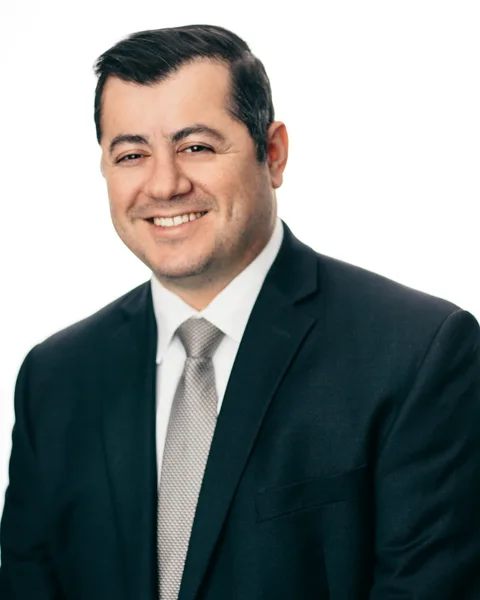
Your Attorney
Frank Younes
Every page on this site is written by Frank Younes, a Nebraska trial attorney with a published record of verdicts and settlements, selection to the National Trial Lawyers Top 100, and a practice that covers every county in Nebraska and Iowa. No case is handed to an associate — the lawyer you read here is the lawyer who works your case.
More about Frank → · Free consultation: (402) 378-9208