What happened
A 76-year-old Lincoln man died after a four-vehicle crash on eastbound Interstate 80 late Thursday night, about four miles east of the Kearney exit. According to the Buffalo County Sheriff's Office, deputies were called at about 10:38 p.m. Thursday, September 3, to the eastbound lanes of I-80 near mile marker 276. Three passenger vehicles and a semi-truck were involved. The Lincoln man, identified by outlets as Donald L. Wooley, was driving a Ford Taurus and was taken to CHI Health Good Samaritan in Kearney, where he died of his injuries. The Kearney Police Department, Kearney Volunteer Fire Department and Good Samaritan EMS responded along with deputies. The Nebraska State Patrol's crash reconstruction unit and the Buffalo County Sheriff's Office–Kearney Police Department Fatality Accident Investigation Team are investigating. No cause has been stated and no citations have been reported. (KSNB; KRVN; NTV)
What has not been published is the part that matters most: how four vehicles came together. No outlet has reported the sequence of impacts, which vehicle struck which, whether the semi was the first vehicle involved or the last, or what happened to the people in the other three vehicles. Those are exactly the questions a fatality accident team spends weeks answering, and until it does, no one — including this page — can say who was responsible for what. One note on the name: KRVN reported it as Wooley and NTV as Wolley; this article uses KRVN's spelling.
Our condolences
Donald Wooley was 76 and driving home to Lincoln on a Thursday night, and he did not get there; somewhere in Lincoln a family is now doing the things nobody is ever ready to do. Our thoughts and prayers are with them and with everyone who loved him. We are also thinking of the people in the other three vehicles, whose condition has not been reported and who were on that same dark stretch of road with him, and of the Kearney firefighters, deputies and Good Samaritan staff who worked through the night.
Safety context
Nebraska's roads are getting safer by the numbers, and a night like this one is a reminder of how far there is to go. The Nebraska Department of Transportation's 2025 Annual Report counted 228 people killed in traffic crashes on Nebraska roads in 2025, down from 251 the year before. Interstate 80 runs the full width of the state and carries a disproportionate share of the fatal ones, particularly at night and particularly where truck traffic and passenger traffic mix at speed.
The specific hazard on a road like eastbound I-80 at 10:30 at night is closing speed. Traffic is thin enough that drivers relax and dense enough that it still bunches, a loaded semi at highway speed needs the length of two football fields to stop, and a passenger car traveling slowly — or stopped — in a travel lane is nearly invisible until a driver is on top of it. If you drive I-80 after dark: leave more room behind trucks than feels necessary, because the truck ahead cannot see what it is about to have to stop for; keep your eyes up and far down the road rather than on the taillights immediately ahead; and if your vehicle becomes disabled, get it entirely off the roadway and get yourself away from it, because the shoulder is safer than the lane and the ditch is safer than the car.
The rights of families after a crash like this
A four-vehicle crash is legally a different animal from a two-car collision, and families are often surprised by how.
The starting point is the same. When someone dies because another driver was careless, Nebraska law gives the family a wrongful death claim, brought by the estate's personal representative for the benefit of the surviving spouse and next of kin, and under Neb. Rev. Stat. § 30-810 that action must be commenced within two years after the death. Two years sounds generous. In a multi-vehicle interstate case it is not, because the evidence that decides the case lives on shorter clocks than the courthouse does.
The difference comes in figuring out who owes what. With four vehicles, responsibility is rarely all-or-nothing. A crash like this could have begun with a single event — a slowing vehicle, a lane change, a truck that could not stop in time — and then rippled backward or forward through the others, and the law has to sort out each driver's share. Nebraska does that through comparative negligence. Under § 25-21,185.09, a claimant's own negligence reduces the recovery in proportion to their share of fault — but if that share is equal to or greater than the combined negligence of everyone being sued, recovery is barred entirely. That 50 percent line is where multi-vehicle cases are won and lost, and it is why the sequence of impacts, which no one has yet reported, is everything. If the reporting eventually shows the Lincoln man's car was struck from behind while traveling normally, his family's position looks one way. If it shows his vehicle was stopped or slowed in a travel lane, the questions become why, whether it was lit, and how much time the drivers behind him had. If the semi was the vehicle that initiated the chain, the analysis shifts again, and shifts hard.
That last possibility deserves its own paragraph, because a commercial truck in the mix changes a case fundamentally. Behind a semi sits a chain that no passenger car has: the driver, the motor carrier that employed and dispatched him, the company that maintained the truck, sometimes a broker that arranged the load, and federal regulations governing all of it — hours of service, driver qualification, inspection and maintenance. The truck's own electronic control module recorded its speed, braking and throttle in the seconds before impact. Its driver's logs and dispatch records show how long he had been on the road. If the truck was the cause, those records are the case. If the truck was a victim of someone else's mistake, those same records are the truck's defense. Either way, they exist now and they are not owed to anyone who does not ask for them.
Which is the point about the two-year deadline. Trucks get released to salvage. Electronic data gets overwritten on a schedule. Three other vehicles get repaired or scrapped. Witnesses to a 10:38 p.m. crash on I-80 are people passing through from somewhere else, and finding them a year later is close to impossible. Preservation letters cost nothing and have to go out in days, not months, and in a case where four vehicles and four insurers are each going to point at the others, the family that has the physical evidence is the family whose account gets believed.
Learn more about your rights: if this touches your family, it may help to read about how crashes involving semis are investigated and who can be held responsible, about what a family can recover when a loved one is killed on the road, about how fault is divided in a multi-vehicle crash, and about my roots in Kearney and the work I do there.
How I help families in crisis
A family in Lincoln arranging a funeral cannot chase down four insurance companies and a trucking carrier, and should not have to. That is what I take off their shoulders.
In a case like this the work starts immediately and it is not glamorous. Preservation letters go to the carrier and to every vehicle owner so that nothing is repaired, released or overwritten. A request goes to the fatality accident team for the reconstruction when it is complete, and if the answer is unsatisfying, an independent reconstruction follows. Someone gets to mile marker 276 while the marks are still on the pavement. And every insurer — there may be four — gets one point of contact, so that no one in the family gives a recorded statement in the fog of the first week that a defense lawyer reads aloud in year two.
Then comes the part that matters most to me: telling the family the truth. Sometimes the reconstruction says the person who died was the one who made the mistake, and the honest answer is that there is no case. Families deserve to hear that from someone who actually did the work, not to assume it from a news story that said nothing about fault at all.
Over my career I have recovered more than $23 million for injured people and grieving families, earned countless five-star reviews from clients and endorsements from fellow attorneys, and been honored as part of a Best of Omaha personal injury team in 2025 and 2026. I was born and raised in Kearney, and I know that stretch of I-80 the way you only know a road you have driven a thousand times.
If this was your father, your husband or your friend, reach out when you are able and we will go through what happened together — the conversation is free, you are under no obligation afterward, and if I take the case my fee is paid only from what I actually recover for your family.
Frequently asked questions
- What happened in the crash near Kearney?
- A 76-year-old Lincoln man died after a four-vehicle crash on eastbound Interstate 80 late Thursday night, about four miles east of the Kearney exit. According to the Buffalo County Sheriff's Office, deputies were called at about 10:38 p.m. Thursday, September 3, to the eastbound lanes of I-80 near mile marker 276.
- What are the rights of families after a crash like this?
- A four-vehicle crash is legally a different animal from a two-car collision, and families are often surprised by how. The starting point is the same. When someone dies because another driver was careless, Nebraska law gives the family a wrongful death claim, brought by the estate's personal representative for the benefit of the surviving spouse and next of kin, and under Neb. Rev. Stat. § 30-810 that action must be commenced within two years after the death.
- How does Frank Younes help families after something like this?
- A family in Lincoln arranging a funeral cannot chase down four insurance companies and a trucking carrier, and should not have to. That is what I take off their shoulders. In a case like this the work starts immediately and it is not glamorous.
Related coverage
Hastings Woman, 73, Killed in Dense-Fog, Wrong-Way Crash With Semi on I-80 Near Grand Island
Two Semis Hit Concrete Barriers on Eastbound I-80 at Mile Marker 388 in Seward County; Second Truck Overturns and Burns, Driver Hospitalized
Pickup, Semi Trailer Catch Fire After I-80 Crash Near Maxwell, Nebraska
Your Attorney
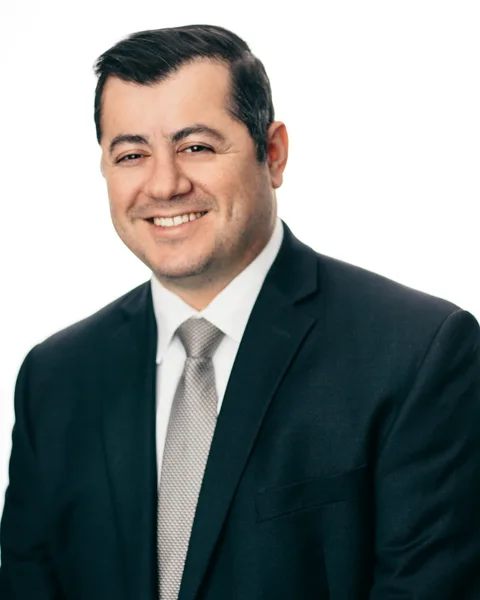
Frank Younes
Every page on this site is written by Frank Younes, a Nebraska trial attorney with a published record of verdicts and settlements, selection to the National Trial Lawyers Top 100, and a practice that covers every county in Nebraska and Iowa. No case is handed to an associate — the lawyer you read here is the lawyer who works your case.
More about Frank → · Free consultation: (402) 378-9208