When an 80,000-pound tractor-trailer hits a passenger vehicle, the physics are merciless — and so is what follows. Within hours of a serious truck accident, the carrier's rapid-response team is often on scene: investigators, adjusters, defense counsel, all shaping the record before the injured family has even left the hospital. I level that field. I litigate aggressively against trucking companies, their insurers, and negligent drivers throughout Nebraska and Iowa, including the I-80 and I-29 corridors. I regularly take truck accident cases from North Platte and the western I-80 corridor. As a Nebraska truck accident lawyer, I build semi and 18-wheeler cases around the carrier’s own records — the logs, the engine data, the cameras — before the carrier decides what survives.
Nebraska Is Trucking Country — Which Makes It Truck-Accident Country
Interstate 80 is one of the busiest freight corridors in America, running border to border through Nebraska; I-29 carries the north-south freight spine along the Iowa side of the river; and U.S. highways like 81, 30, 75, and 275 move grain trucks, tankers, and regional freight through two-lane country at highway speeds. That geography shapes my caseload: chain-reaction crashes in interstate work zones, lane-change and underride collisions in commuter traffic near Omaha and Lincoln, tanker rollovers on rural curves, and agricultural equipment collisions on county roads. The recent fatal crashes across our region — semis striking slowed traffic on I-80, tankers crossing center lines near Beatrice, a truck leaving I-29 near Honey Creek — follow patterns every trucking lawyer knows, because the causes repeat: fatigue, speed for conditions, following too closely, improper loading, and maintenance failures.
Why Truck Cases Are Different
The driver is rarely the only defendant. The motor carrier, vehicle owner, shipper or broker, and maintenance contractors may all share responsibility — and each brings its own insurance.
Federal rules set the standard. Hours-of-service limits, drug and alcohol testing, inspection and maintenance requirements, driver qualification files. A violation can transform a disputed crash into a documented safety-failure case.
The evidence is powerful and perishable. Electronic control modules, driver logs, dispatch records, and cameras exist — but none of it is volunteered. Preservation demands must go out immediately.
The defense starts immediately. No other kind of injury case features the at-fault side deploying investigators to the scene within hours. That head start is exactly what an injured family's lawyer has to erase — quickly.
The Federal Safety File on Every Truck
Commercial trucking is one of the most regulated activities on American roads, and every regulation creates a paper trail my clients can use. Hours-of-service rules limit how long a driver can be behind the wheel, and electronic logging devices record driving time automatically — which means a fatigued-driving case can often be proven from the truck's own data. Carriers must maintain driver qualification files documenting licensing, training, and driving history; conduct drug and alcohol testing; and document inspection, repair, and maintenance on a schedule.
Each requirement is a place carriers cut corners under economic pressure, and each corner cut is a case theory. A driver pushed past his hours to make a delivery window. A brake defect that a required inspection should have caught. A driver hired despite a disqualifying history because freight needed moving. When the paper trail shows the crash was the predictable result of choices — not an "accident" — the case changes character entirely. Juries understand that distinction, and so do the insurers who have to price it. The safety file also answers the question families ask most: how was this allowed to happen? Sometimes the honest answer, documented in the carrier's own records, is that it was allowed to happen because preventing it cost money.
The First Two Weeks Decide the Case
Trucking litigation is won or lost early. The carrier's team starts within hours; the injured family's team needs to start within days. The first moves are always the same: a formal preservation letter demanding the carrier retain the electronic control module data, driver logs, dashcam footage, dispatch and communication records, maintenance files, and the tractor and trailer themselves before repair. Without that letter, data gets overwritten in the ordinary course of business and the truck is back on the road — legally.
Where injuries are catastrophic, I put an accident reconstructionist on the physical evidence while it still exists: the vehicles, the roadway marks, the final rest positions. The ECM download alone can establish speed, braking, and throttle in the seconds before impact — objective answers to the questions the carrier's version of events depends on blurring. I also move early on the human evidence: witness statements before memories fade and before the carrier's investigators get to them first.
The Broker Behind the Carrier
Here's a layer most families never hear about. Much of the freight on I-80 moves through freight brokers — middlemen who choose which trucking company hauls a load. Some brokers vet carriers carefully; others hand loads to the cheapest bid regardless of safety record. In May 2026, the U.S. Supreme Court held in Montgomery v. Caribe Transport II, LLC that negligent-hiring claims against freight brokers are not preempted by federal law — which means a broker who carelessly hired an unsafe carrier can now be held accountable alongside the driver and the trucking company.
This matters enormously in practice, because many small carriers running Nebraska's interstates carry minimal insurance — sometimes nowhere near enough for a catastrophic injury or a death — while the brokers that hire them are often substantial, well-insured logistics companies. Adding a viable broker claim can be the difference between a recovery capped by an inadequate policy and a case that actually reflects what happened to your family. Broker vetting records are exactly the kind of evidence that disappears quietly, which folds back into the first-two-weeks rule: preservation demands go to the broker too. I wrote a full guide on this development: Freight Broker Liability in Nebraska Truck Accidents.
Catastrophic Injuries Need Catastrophic-Injury Valuation
Truck crash injuries cluster at the severe end: spinal cord damage, traumatic brain injuries, crush injuries and amputations, burns from post-crash fires. Cases like these aren't valued from a stack of bills — they're built from expert work: life-care planners pricing decades of future medical needs, home modification, and attendant care; vocational experts and economists establishing what a working life would have earned; treating physicians establishing permanency. Carriers offer early money precisely to close the file before that number exists. I don't let clients settle before their future is actually priced — and when a crash takes a life, the case becomes a wrongful death claim with Nebraska's shorter two-year deadline (Neb. Rev. Stat. § 30-810) and its own valuation of what a family lost. See my wrongful death page for how those cases work; in trucking, the two analyses often run together. Every Nebraska deadline, with the statute text, is in my Nebraska statute of limitations guide. How lifetime losses are proved, and where the insurance comes from, is on my catastrophic and serious injury page.
What These Cases Demand
Commercial policies are large, injuries are severe, and carriers defend accordingly. The difference between an ordinary settlement and full compensation is a lawyer who identifies every responsible entity, obtains the regulated records, and prepares the case for a Nebraska jury. Nebraska's modified comparative negligence rule (Neb. Rev. Stat. § 25-21,185.09) reduces your recovery by your percentage of fault — and bars it entirely at 50%. Carrier defense teams work that rule hard, arguing the passenger vehicle "cut off" the truck or braked suddenly; answering those arguments with data from the truck itself is one of the quiet advantages of moving fast on evidence.
Nebraska's overall road-safety picture underlines the stakes: NDOT's annual report recorded 228 traffic fatalities statewide in 2025, and heavy-truck collisions contribute an outsized share of the worst outcomes on the interstate system. If your family is facing a serious truck crash, get representation before the carrier's team finishes its version of events. The first two weeks matter more than any other period in the case.
The Causes We Prove, Over and Over
Truck crashes repeat their causes, and each cause maps to a category of evidence. Fatigue — the industry's oldest problem, now provable from electronic logging data, dispatch pressure documented in messages, and delivery schedules that made legal driving impossible. Speed for conditions — a loaded semi needs far more room to stop than the traffic around it, and data from the truck itself answers how fast it was actually moving into slowed traffic, fog, or ice. Following distance — the rear-end crashes on I-80's congestion shockwaves, where physics did exactly what physics does. Improper loading and securement — shifted loads that turn lane changes into rollovers and unsecured cargo that becomes roadway debris; loading records point at shippers and loading contractors, not just drivers. Maintenance failures — brakes, tires, lights; the inspection records either show the work was done or show it wasn't. Inexperience and inadequate training — a qualification file that shouldn't have survived review, on a driver who shouldn't have been dispatched.
The pattern to notice: every one of these causes implicates company decisions, not just driver mistakes. That's why the corporate records matter, and why carriers guard them.
Underride, Jackknife, Rollover: Why the Injuries Run So Severe
The crash types unique to heavy trucks explain the injury severity that defines these cases. Underride — a passenger vehicle sliding beneath a trailer — defeats every safety system a car has. Jackknifes sweep across multiple lanes and collect vehicles that had nowhere to go. Rollovers crush what they land on, and loaded trailers turn modest impacts into massive intrusions. Tanker crashes add fire and hazardous cargo to the physics, as our region's recent tanker fatalities near Beatrice grimly illustrated. This isn't offered to frighten anyone — it's why truck cases are valued, staffed, and fought differently than car crashes, and why the defense shows up immediately. The injuries justify the fight.
Dealing With the Carrier's Insurer
Commercial liability insurers are not the neighborhood auto adjuster. Expect professionals: adjusters who handle only trucking claims, defense firms retained within days, and — in serious cases — early contact that looks like concern and functions like intelligence-gathering. Expect requests for recorded statements and medical authorizations broad enough to fish through your entire history. Decline politely; sign nothing; route everything through counsel.
And expect the well-timed offer: enough money to feel meaningful to a family facing bills, presented before the ECM download, before the safety file, before anyone has priced a lifetime of care. The offer is not generosity — it's arbitrage on your family's uncertainty. The answer to it is information: once the evidence is preserved and the future is priced, the number either rises to meet reality or a Nebraska jury gets to hear why it should.
Work Zones, Weather, and Chain Reactions
Two crash environments deserve their own word, because Nebraska's interstates specialize in both. Work zones compress traffic into shifted, narrowed lanes with sudden speed changes — and when a loaded semi meets the back of that compression at highway speed, the results fill this region's worst headlines. Work-zone cases add layers: the zone's design, signage, and traffic control enter the analysis alongside the driver's speed and attention, which can bring contractors and their records into the case. Weather chains are the other signature: fog banks and ice sheets on I-80 that turn one mistake into a twenty-vehicle pileup. Multi-vehicle truck accidents raise the hardest sorting questions in this practice — who hit whom, in what order, and which impacts caused which injuries — and they're answered the same way everything else in trucking is answered: data, downloads, and reconstruction, secured before the wreckage is scattered to salvage yards. Families in pileup cases often assume the chaos means no one can be held responsible. The opposite is usually true: the chaos means several parties can — and the evidence race just has more runners.
When the Injured Person Is the Trucker
Not every trucking client sits in the passenger vehicle. Drivers themselves get hurt — by other motorists, by other commercial vehicles, by loading operations and equipment — and a trucker's case layers the systems: workers' compensation through the employment, a third-party claim against whoever caused the crash, and sometimes the same federal-records fight from the other side. Recent fatal crashes in our region have included tanker drivers whose own families were left behind, and those families hold claims too — comp death benefits and, where another party contributed, wrongful death. Professional drivers know better than anyone how the industry actually operates; when one becomes a client, that knowledge becomes case-building fuel. My work injury practice handles the comp side in-house, which means a trucker's whole picture gets one advocate instead of a referral chain.
Truck Cases in Depth
Dedicated pages on the parts of a truck case that decide it.
Real Truck Crashes, Real Cases
From cases I handled: the aftermath when 80,000 pounds meets something else on the road.
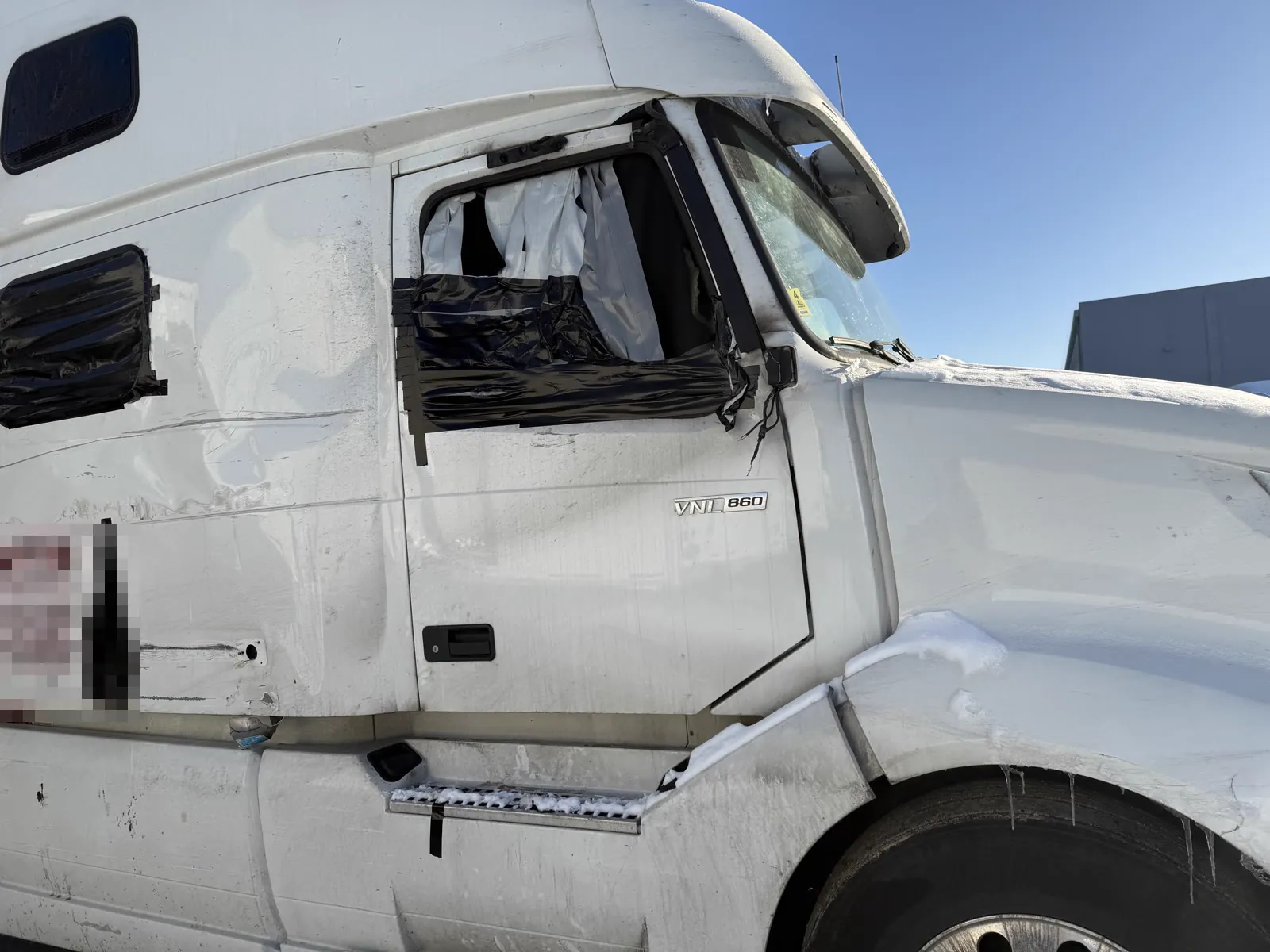
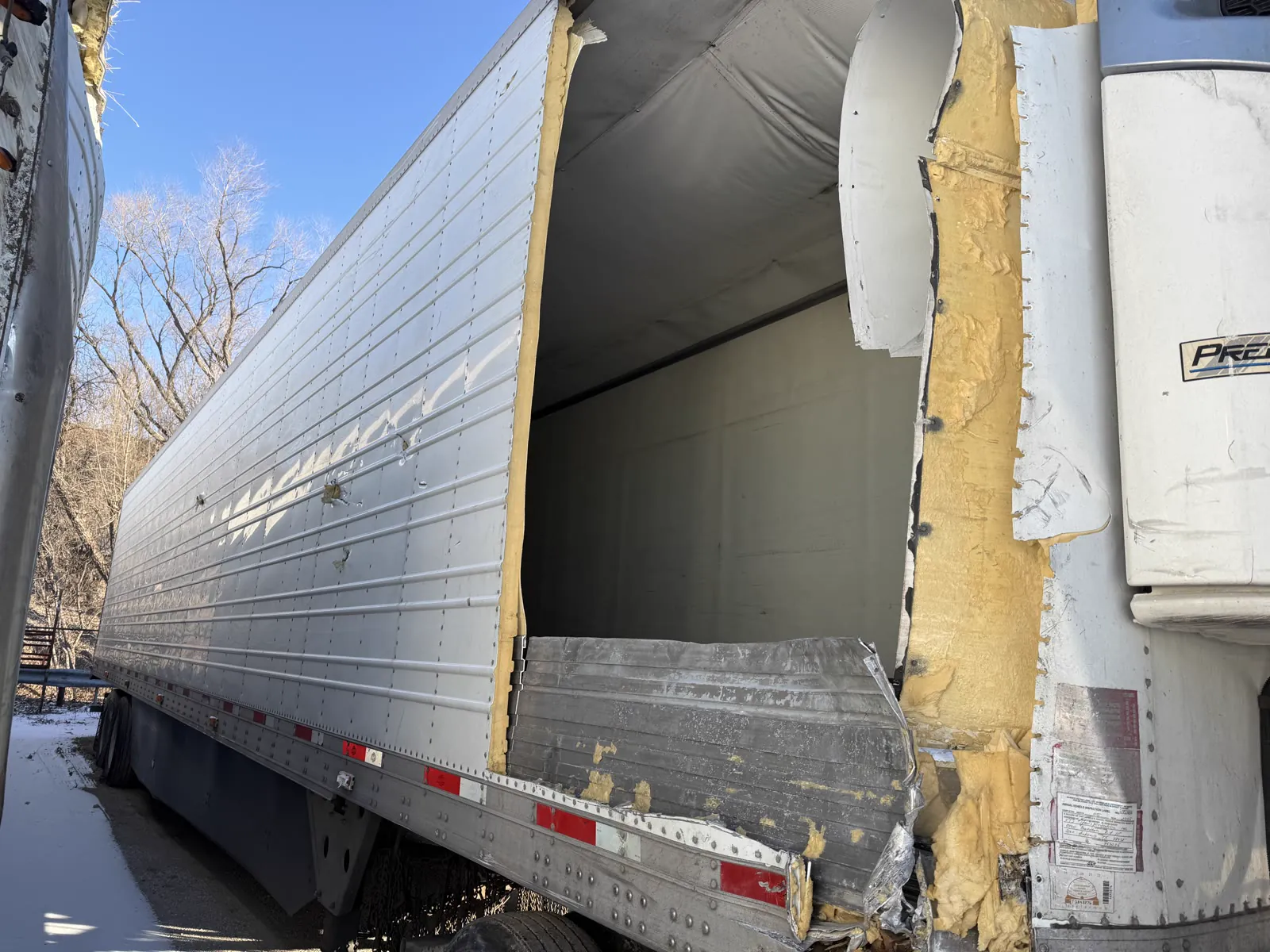
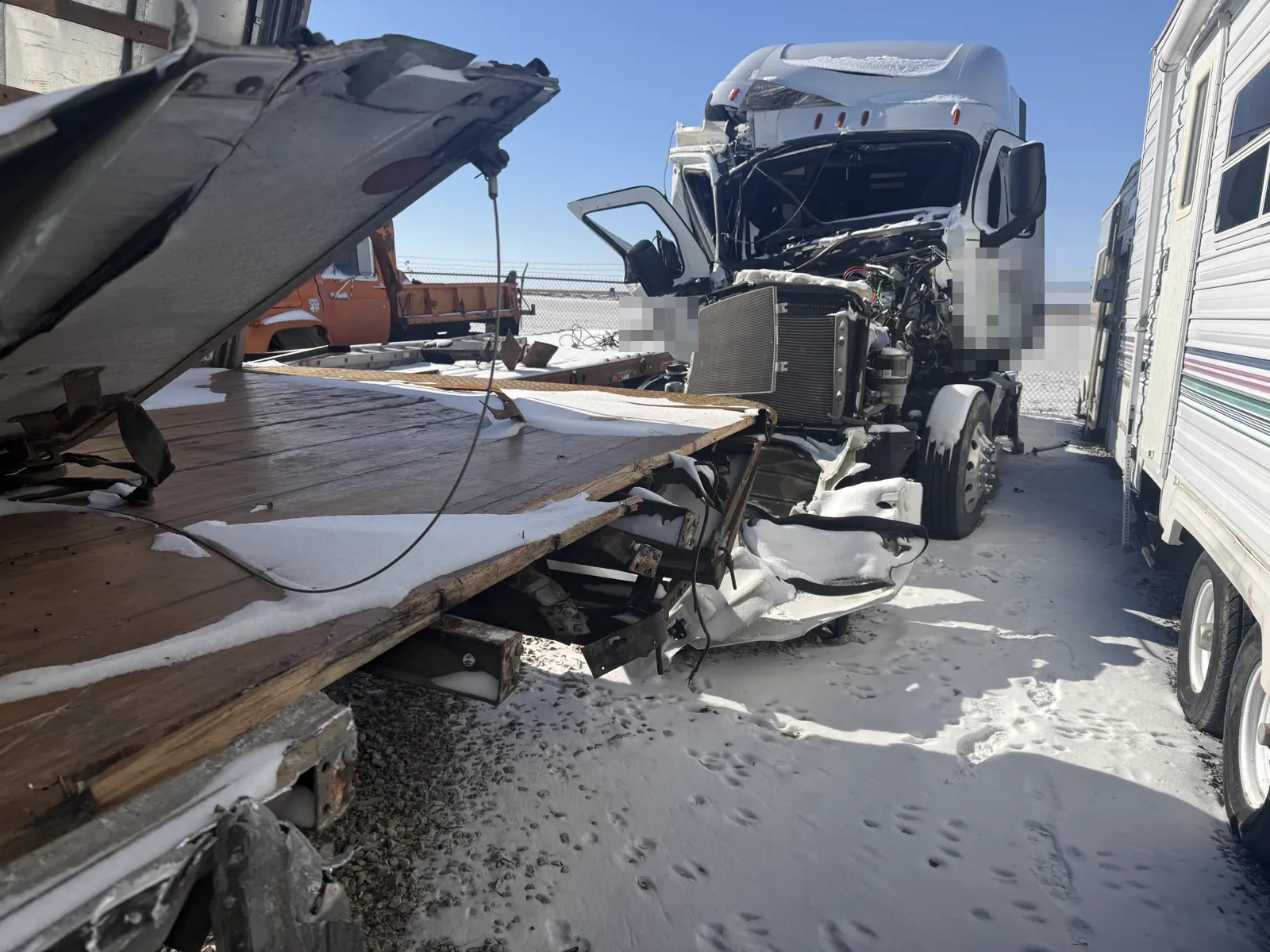
Photos from resolved client matters; identifying details obscured.
Selected Results
From my full results list. Past results do not guarantee future outcomes.

Your Attorney
Frank Younes
Every page on this site is written by Frank Younes, a Nebraska trial attorney with a published record of verdicts and settlements, selection to the National Trial Lawyers Top 100, and a practice that covers every county in Nebraska and Iowa. No case is handed to an associate — the lawyer you read here is the lawyer who works your case.
More about Frank → · Free consultation: (402) 378-9208
Frequently Asked Questions
When should I call a truck accident attorney?
As soon as you can after getting medical care. Trucking companies and their insurers usually start investigating right away, and federal rules require a carrier to keep a driver’s duty-status records and electronic log backups for only six months. A truck accident attorney can send preservation demands before that evidence is gone. I handle truck accident cases across Nebraska and Iowa, the consultation is free, and there is no fee unless I win.
Who can be held responsible after a truck accident in Nebraska?
Potentially the driver, the motor carrier, the vehicle owner, the shipper or broker, and maintenance contractors — each with separate insurance. Identifying every responsible entity is often the difference between a limited recovery and full compensation.
What evidence matters most in a truck accident case?
Electronic control module data, driver logs and hours-of-service records, inspection and maintenance files, dispatch records, and any onboard camera footage. This evidence is held by the carrier and can be overwritten — preservation letters must be sent immediately.
What does it cost to hire a truck accident lawyer?
Nothing up front — these cases are handled on a contingency fee, with no attorney's fee unless the case is won. The consultation is free.
The trucking company's insurance adjuster already called me. What do I do?
Politely decline to discuss the crash or give any recorded statement, take down their contact information, and talk to a lawyer first. The carrier's team is building its defense from day one — anything you say becomes part of that file.
Can I sue the freight broker who hired the trucking company?
Possibly. After the Supreme Court's 2026 decision in Montgomery v. Caribe Transport II, negligent-hiring claims against brokers are no longer blocked by federal preemption. If the broker carelessly selected an unsafe carrier, it can share responsibility — and brokers often carry far more insurance than the small carriers they hire.
What if the truck driver was an "independent contractor"?
Carriers often raise this to distance themselves from the driver. It rarely ends the inquiry — federal motor-carrier responsibilities, the realities of who controlled the work, and the roles of the owner, shipper, and broker all still matter. Sorting out who actually answers for the crash is exactly what these cases are about.
A family member was killed in a truck crash. What are our rights?
Your family may have a wrongful death claim, which in Nebraska must generally be filed within two years (Neb. Rev. Stat. § 30-810) — half the ordinary injury deadline. Truck accident wrongful death cases carry the same urgency on evidence as injury cases, plus that shorter clock. See my wrongful death page, and please don't wait to have the conversation.
How long will a truck accident case take?
Longer than a routine car crash claim, honestly — multiple defendants, federal records, experts, and serious injuries take time to develop properly. But that development is where the value comes from. The cases that resolve fast and cheap are the ones where nobody did the work.
Talk to Frank — Free Consultation
Trucking companies field rapid-response teams within hours of a crash. I've recovered more than $23,000,000 for injured Nebraskans, with 41 verified five-star client reviews and a firm voted Best of Omaha for personal injury law in 2025 and 2026. My job is to take the stress off your shoulders, take up the shield for your family, and fight for every dollar you're owed.
Call (402) 378-9208From the Blog
Recent writing on this area of the law.
Carriers send investigators, adjusters, and defense lawyers to a serious wreck within hours — here's what they're collecting, and how families keep up.
Driver logs, dispatch messages, and delivery schedules are where fatigue shows up — and they point past the driver to whoever set the clock.
The trucking company, the freight broker, the shipper, and the maintenance company can all share responsibility for a semi-truck crash.
A fatal Gage County crash involving a semi hauling anhydrous ammonia shows how much hazmat cargo adds to a truck crash investigation.
An I-380 semi tire blowout sent a truck into a creek — why maintenance records and inspection history are central to how these liability cases get built.
A fatal Highway 81 collision near Norfolk involving a fuel tanker shows what makes semi-truck cases different: federal regulations, multiple defendants, and evidence that disappears fast.