What happened
A 73-year-old Hastings woman died Thursday morning when the SUV she was driving, traveling eastbound in the westbound lanes of Interstate 80, collided with a semi-truck in dense fog near the Grand Island interchange. According to KSNB Local 4 and Central Nebraska Today, Hall County sheriff's deputies were called to I-80 at mile marker 312 at about 7:50 a.m. Thursday, August 20. A preliminary investigation indicates a 2012 Dodge Journey was eastbound in the westbound passing lane when it collided with a westbound 2019 International semi-truck. The Hastings woman driving the Dodge was pronounced dead at the scene. The semi driver, Josh Wakefield, 46, of North Platte, was taken to Grand Island Regional Hospital to be evaluated for potential injuries. Hall County was under a dense fog advisory that morning, and investigators said extremely low visibility is being considered as a contributing factor. Alcohol is not suspected, and seat belts were in use in both vehicles. The sheriff's office said investigators are still determining what happened and how the SUV ended up in the westbound lanes. The Nebraska State Patrol, Doniphan Quick Response Team, Grand Island Fire Department, and the Hall County Attorney's Office also responded. (KSNB Local 4; Central Nebraska Today)
Our condolences
A 73-year-old woman left Hastings on a foggy Thursday morning and never made it home. Whatever the investigation ultimately finds, her family is living with a sudden, wrenching loss, and our hearts are with them. We're also thinking of Josh Wakefield — a professional driver who had no time and no chance to avoid what emerged from the fog, and who will carry that morning with him. There are no winners in a crash like this one.
Safety context
Fog is one of the most underestimated killers on American highways. Each year, more than 38,700 vehicle crashes occur in fog in the United States, killing over 600 people and injuring more than 16,300, according to the Federal Highway Administration (FHWA). Dense fog doesn't just shorten what you can see — it erases the visual cues drivers rely on to know where they are: which ramp they're on, which lanes are which, how fast traffic is moving. Dense fog is also not a hazard a driver is free to simply drive through at normal speed. Every driver's obligation in fog starts with slowing down — to a speed that matches what you can actually see — and giving the road complete, undivided attention: no phone, no distractions, extra following distance, and low beams rather than high, which only reflect back off the fog. Turning on your hazard flashers gives the traffic coming up behind you the earliest possible warning that you are moving slowly. And when the fog or the road becomes bad enough that you cannot see far enough to react, the obligation is to stop driving: take an exit, pull into a rest area or parking lot, or find another safe place well clear of the travel lanes, and wait there until the hazard clears. If you cannot see far enough to stop, you cannot see far enough to be safe at highway speed.
The rights of families after a crash like this
The hardest question in this crash is the one investigators themselves say they haven't answered: how did the SUV end up traveling the wrong way in the westbound lanes? In dense fog, at an interchange, that question deserves a careful, complete answer — not an assumption. Wrong-way entries at interchanges can involve many factors: disorientation in near-zero visibility, ramp geometry and signage that may be hard to see in fog, a medical event behind the wheel, or driver error, alone or in combination. For the family of the woman who died, an independent investigation is often the only way to truly understand what happened in their loved one's final minutes — and in some cases it changes the legal picture, because what looks at first like a driver's mistake can turn out to have contributing causes no one saw initially. For a working driver like the semi's operator, a crash like this can also bring its own injuries, lost work time, and claims, including workers' compensation for an on-the-job crash. What the facts will ultimately support here is unknown, because the investigation is ongoing and the sheriff's office has drawn no final conclusions.
Learn more about your rights: families affected by a crash like this can read more about car accident claims in Nebraska and wrongful death claims, or learn about my work for injured people in the Grand Island area.
How I help families in crisis
When a family loses someone on the highway, the questions come faster than the answers — and the early answers aren't always the whole story. My role is to shoulder that burden for the family: to take up the shield, protect their rights and their loved one's memory while the facts are sorted out, and walk beside them through the weeks and months that follow.
Fog crashes are not new territory for me. Earlier in my career, I served as legal counsel for a party in a highway pile-up involving more than 30 vehicles in dense fog — and I learned first-hand how those cases are really decided: not by who ended up where in the wreckage, but by what each driver could see, how fast each was going, and who kept driving into a wall of fog at highway speed instead of slowing down or getting off the road. That experience shapes how I investigate every weather-related crash.
I move fast to preserve what matters — vehicle data, scene evidence, weather records, witness accounts — and I bring in accident reconstruction experts when a family needs to know, with confidence, what really happened. I handle every conversation with the insurance companies so the family doesn't have to relive the worst morning of their lives across a negotiating table.
In my career I've recovered more than $23 million for injured people and their families, earned countless five-star client reviews and peer endorsements, and been part of a personal injury team honored as Best of Omaha in both 2025 and 2026.
If your family is carrying questions from this crash or one like it, I'm glad to sit down with you at no cost and with no strings attached — and if we work together, my fee comes only out of a win.
Frequently asked questions
- What happened in the wrong-way fog crash on I-80 near Grand Island?
- A 73-year-old Hastings woman died Thursday morning when the SUV she was driving, traveling eastbound in the westbound lanes of Interstate 80, collided with a semi-truck in dense fog near the Grand Island interchange. According to KSNB Local 4 and Central Nebraska Today, Hall County sheriff's deputies were called to I-80 at mile marker 312 at about 7:50 a.m. Thursday, August 20.
- What are the rights of families after a crash like this?
- The hardest question in this crash is the one investigators themselves say they haven't answered: how did the SUV end up traveling the wrong way in the westbound lanes? In dense fog, at an interchange, that question deserves a careful, complete answer — not an assumption.
- How does Frank Younes help families after something like this?
- When a family loses someone on the highway, the questions come faster than the answers — and the early answers aren't always the whole story. My role is to shoulder that burden for the family: to take up the shield, protect their rights and their loved one's memory while the facts are sorted out, and walk beside them through the weeks and months that follow.
Related coverage
Woman Killed, Child Airlifted After Semi Strikes Parked Pickup on I-80 Near Sutherland
Florida Truck Driver Killed When Semi Strikes Merging Flat-Bed on I-80 Near Brady
Van Driver Airlifted After Head-On Crash on Highway 30 in Merrick County, Pickup Driver Cited
Lincoln Man, 76, Dies After Four-Vehicle Crash Involving a Semi on Eastbound I-80 Near Mile Marker 276 East of Kearney
Your Attorney
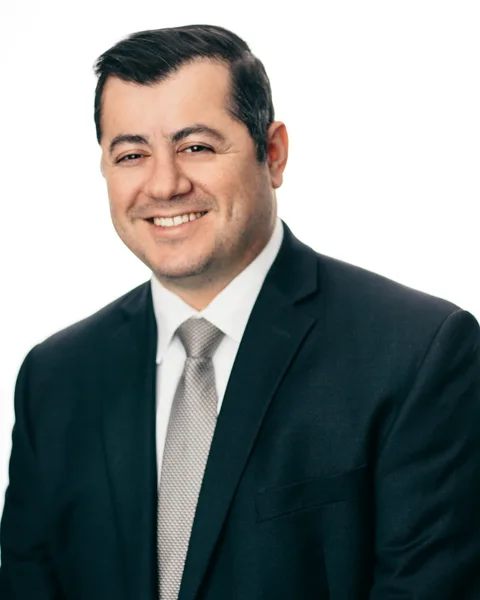
Frank Younes
Every page on this site is written by Frank Younes, a Nebraska trial attorney with a published record of verdicts and settlements, selection to the National Trial Lawyers Top 100, and a practice that covers every county in Nebraska and Iowa. No case is handed to an associate — the lawyer you read here is the lawyer who works your case.
More about Frank → · Free consultation: (402) 378-9208