Most of the injury calls I get from Kearney are car crashes, and most of them happen in a handful of predictable places: the Second Avenue strip, the Exit 272 interchange, the intersections along Highway 30, and the gravel section-line roads that turn into blind crossings every August. I was born and raised here, I know those roads the way you do, and I have handled the cases that come off them for years. This page is about what makes a Kearney car accident claim different from one in Omaha — and it is different, in ways that cost people money when their lawyer does not know the town.
Second Avenue: Where the City’s Crashes Concentrate
Second Avenue is Highway 44 — a state highway running straight through Kearney’s commercial spine from the interstate to downtown, lined with the retail, restaurants, hotels and services that draw everyone in Buffalo County and half the counties around it. It is a road doing three jobs at once: interstate access, regional shopping destination, and city street, and the crash pattern reflects that. Left turns across multiple lanes into and out of parking lots. Rear-end chains at signals where traffic backs up from the interchange. Drivers unfamiliar with the town looking for a hotel. The crashes here are rarely high-speed; they are frequent, and the insurers know it, which is why the “minor impact” defense — covered in this post — shows up on so many Second Avenue claims. Low-speed rear-end collisions produce real spinal injuries; bumper photographs do not measure them.
The Interchange and the Interstate Merge
Exit 272 is where Second Avenue’s city traffic meets I-80’s interstate traffic, and the transition is abrupt. Drivers leaving the interstate arrive at signalized intersections still carrying highway habits; drivers entering it accelerate into a stream of trucks and through-travelers who are not expecting a hesitation. The crashes at and near the interchange are the ones that involve the most serious injuries in the Kearney car-crash population, and they frequently involve out-of-state drivers, rental cars and commercial vehicles — each of which raises its own insurance and jurisdiction wrinkles. A crash with an out-of-state driver on the ramp at 272 is a Buffalo County case with a defendant who will never return to Nebraska, and that shapes how it is investigated and where it is filed.
University Traffic, Young Drivers, and Pedestrians
Kearney is a college town, and the University of Nebraska at Kearney puts thousands of young drivers, cyclists and pedestrians on the west side of the city nine months a year. Young drivers crash at higher rates than any other group, and the streets around campus mix them with delivery traffic, commuters and students on foot at all hours. Two legal consequences follow. Claims involving young drivers often involve parents’ policies, and sometimes the question of whether a parent’s coverage extends to the crash at all. And pedestrian and bicycle collisions near campus are a distinct category with their own rules, covered on the pedestrian accident page, where the driver’s duty of care is heightened and the injuries are usually severe.
The County Roads, and the Two Months They Go Blind
Outside town, Buffalo County’s section-line grid is a lattice of gravel intersections, most of them uncontrolled or marked with a single stop sign, and from August through harvest the corn stands eight feet tall on every corner. A crossing that is perfectly safe in April becomes blind in September. Add the harvest itself — grain trucks and equipment moving at all hours on roads built for pickups — and the deer, which in this county are not a hypothetical (see the deer collision page for how those claims work). Rural intersection crashes are frequently the worst-injury crashes in the county because nobody slows down for an intersection they cannot see, and they raise a fault question insurers love: who had the right of way at an uncontrolled gravel crossing, and could anyone have seen anyone? The evidence is seasonal and disappears with the harvest, which is the argument for photographing the intersection the week it happens.
Hotel Row and the Driver Who Lives in Another State
Because Kearney is where a great many interstate travelers stop for the night, a striking share of its crashes involve a driver who was in town for eleven hours and will never return. Rental cars, out-of-state plates, insurers headquartered three time zones away. Those cases are entirely winnable, but they are worked differently. The other driver’s insurer will handle the claim from a call center that does not know Second Avenue from Second Street and prices Nebraska claims off a table. Service of process on a defendant in Texas or Utah takes planning. Witnesses who were also passing through have to be found before their memories fade. And the temptation to hit and run is higher for someone who will be four states away by morning — which turns the case into an uninsured-motorist claim against your own policy, with its own reporting requirements. The practical lesson is to gather everything at the scene that you can: the plate, the rental agreement if it is visible, the hotel, the phone number, and photographs of the driver’s license and insurance card rather than a hand-copied version.
Insurance in a Rural County: the UM/UIM Question
Here is the fact that decides more Buffalo County car cases than fault does: the driver who hit you is frequently carrying Nebraska’s minimum liability limits, and minimum limits do not cover a serious injury. When that happens, the money comes from your own policy — the uninsured and underinsured motorist coverage most people have never read. Claiming it is a real negotiation with your own carrier, not a formality, and it has its own notice and consent rules that trip up unrepresented people. The UM/UIM post explains the coverage; the local point is that in a county where a lot of drivers carry minimums, your own policy is often the case. Before you accept that “there just isn’t enough insurance,” let me read every policy in the picture, including yours.
Good Samaritan, and What the Record Has to Show
Injured drivers from Kearney go to CHI Health Good Samaritan, the region’s Level II trauma center, and the record it generates is the spine of the claim. Two practical points. Get seen the day of the crash, even for a “minor” collision, because the gap between crash and treatment is the adjuster’s favorite exhibit and adrenaline masks spinal and head injuries for a day or more. And tell the provider exactly what happened and exactly what hurts, because that first note will be quoted for the life of the claim. For injuries treated locally and then referred on — to specialists in Kearney or beyond — the file has to be assembled completely before anyone talks about value.
Passengers, Kids, and the Claims Nobody Files
Two groups of Kearney crash victims routinely go uncompensated because they do not think they are allowed to claim. The first is passengers in the at-fault vehicle — a friend, a spouse, a coworker riding with the driver who caused the crash. A passenger is almost never at fault, and a passenger has a claim against the driver’s policy regardless of the relationship. People do not file these because it feels like suing a friend; it is not. It is a claim against an insurance policy that exists for exactly this, and declining to make it simply means the injured passenger pays for the driver’s mistake personally.
The second group is children. A child hurt in a crash has their own claim, separate from the parents’, and it has to be handled with more care rather than less: injuries in a growing body are evaluated over a longer horizon, and a settlement for a minor generally involves court oversight to make sure the money is protected for the child rather than absorbed into the household. That is a process I handle regularly, and it is one families should never navigate with an adjuster as their only guide.
The Single-Vehicle Crash Is Not Always a Single-Party Crash
Roll a pickup on a county road at night and the assumption is that there is nobody to claim against. Sometimes that is true. Often it is not. A vehicle forced off the road by another driver who never stopped is a phantom-vehicle case, covered by your own uninsured-motorist policy if it is reported promptly and properly. A crash caused by a washed-out shoulder, an unmarked drop-off, a missing sign or a gravel road left in a dangerous condition raises a claim against the road authority, subject to Nebraska’s short political-subdivision notice deadlines. A crash caused by a tire failure, an airbag that did not fire, or a rollover-prone vehicle raises a product claim. And a deer strike that started a chain of events may involve more than the deer. Single-vehicle crashes are where the most valuable claims in rural counties get abandoned unexamined, because nobody asks the second question. Ask it.
Comparative Fault, Kearney Edition
Nebraska reduces your recovery by your percentage of fault and bars it at fifty percent, and every adjuster works to move that percentage. On Second Avenue it is “you stopped short.” At 272 it is “you merged into the truck.” On a gravel crossing it is “you had the stop sign” or “you were speeding for conditions.” Those percentages are negotiated from evidence — the crash report, the vehicle damage, witness accounts, and in serious cases a reconstruction — and the driver who has that evidence assembled negotiates from a very different position than the one who accepted the adjuster’s version on the first phone call. Say nothing to the other driver’s insurer until you have talked to a lawyer, and be careful what you say to your own.
What a Kearney Car Accident Claim Recovers
Medical bills past and future, including care that has not happened yet; lost wages and, where the injury is permanent, lost earning capacity; the cost of a vehicle and the time without one; and the human damages the law calls pain and suffering, which is where serious cases carry their value. A word on the last item, because Buffalo County juries have a reputation and insurers price against it: fair does not mean small, and the settlement value of a case is what a jury in Kearney would award if the insurer refused to pay — a number I know from trying cases here, and one the adjuster in another state is guessing at.
If the Other Driver Was Working
A crash with a delivery van, a company pickup, a semi or a rideshare car is a different case with more defendants and more insurance. Employers are liable for their drivers, commercial policies are larger, and commercial vehicles carry data. Semi crashes have their own page — Kearney truck accidents — and rideshare collisions are covered on the rideshare post. If the other driver was on the clock, say so in the first conversation; it changes who gets sued.
Which Agency Wrote Your Report
A small detail that costs people weeks: three different agencies investigate Kearney-area crashes, and the report lives with whichever one responded. Inside city limits, including Second Avenue and the streets around campus, it is the Kearney Police Department. On the county roads and the gravel grid it is the Buffalo County Sheriff. On I-80 itself and at the interchanges it is usually the Nebraska State Patrol. The report takes days to finalize, it is the document every insurer reads first, and it sometimes contains a diagram or a fault indication that is simply wrong — which is correctable, but only if someone reads it early. Know which agency you dealt with, get the report number at the scene, and let me read the report before an adjuster explains it to you.
The First Week
- Get the crash report from the Kearney Police Department or the Buffalo County Sheriff, depending on who responded.
- Photograph everything — vehicles, the intersection, the corn, the skid marks — before it changes.
- See a doctor the same day.
- Find your own policy and check the UM/UIM limits.
- Do not give a recorded statement to the other driver’s insurer.
- Call me. The consultation is free, I come to Kearney, and there is no fee unless I recover for you: (402) 378-9208.
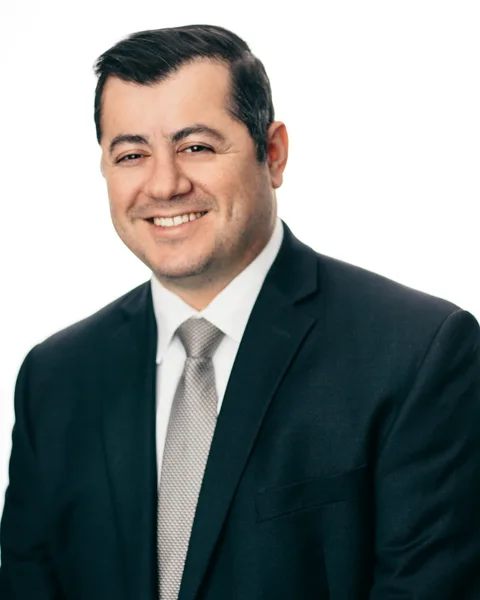
Your Attorney
Frank Younes
Every page on this site is written by Frank Younes, a Nebraska trial attorney with a published record of verdicts and settlements, selection to the National Trial Lawyers Top 100, and a practice that covers every county in Nebraska and Iowa. No case is handed to an associate — the lawyer you read here is the lawyer who works your case.
More about Frank → · Free consultation: (402) 378-9208
Frequently Asked Questions
The other driver only had minimum insurance. Is my case worthless?
No — it likely shifts to your own uninsured/underinsured motorist coverage, which is a real claim against your own carrier with its own rules. In Buffalo County that coverage decides more cases than fault does.
It was a low-speed crash on Second Avenue. Do I have a case?
Bumper damage does not measure spinal injury. Low-speed rear-end collisions in stop-and-go traffic cause real, lasting injuries, and the insurer’s “minor impact” defense is a negotiating position, not medicine. Get seen the same day.
Who was at fault at an uncontrolled gravel intersection?
It depends on right-of-way rules, speed for conditions, and what each driver could see — which in late summer may be nothing. Photograph the intersection immediately; the corn that hid the other car will be gone in weeks.
The other driver was from out of state. Does that matter?
It affects insurance, service and sometimes where the case is heard, and it makes early investigation more important because the defendant will not be coming back. It does not reduce your claim.
Do I have to go to Omaha to hire you?
No. I was born and raised in Kearney and I meet Kearney clients in Kearney — at home, at the hospital, or wherever works.
What if the driver who hit me was working?
Then the employer and its commercial policy are in the case. A semi has its own page on this site; a delivery van, company vehicle or rideshare car changes who gets sued and how much insurance is available.
More From Kearney
The rest of the Kearney series, and the statewide practice pages behind it.
Crashed in Kearney? I’m From Here. Call.
Free, confidential consultation — in English or Spanish. No fee unless I win.
Call (402) 378-9208