What happened
Two men from Kingsland, Texas — a grandfather and his grandson — were killed early Thursday morning when the SUV they were riding in was struck by a Union Pacific train at a rural crossing in Cass County, southwest of Plattsmouth. According to the Cass County Sheriff's Office, the crash was reported at 5:59 a.m. Thursday, September 10, at the railroad crossing just east of the intersection of 12th Street and Church Road, on the stretch of country between Plattsmouth and Murray. A Texas-plated Mazda SUV was headed west on Church Road — described in the reporting as a narrow gravel road — when it was hit by a northbound Union Pacific train. Vernon Hays, 73, and Gabriel Johnson, 22, both of Kingsland, were pronounced dead at the scene. "Upon deputies' arrival, they located a Texas-plated Mazda SUV with two deceased in the vehicle," Cass County Sheriff's Capt. Reid Richter said. The two men were contract employees working on construction of a new Omaha Public Power District substation in the area, and were on their way to work when the crash happened. Murray Fire and Rescue, Cass County Emergency Management, a Union Pacific special agent and the Cass County Attorney's Office responded to the scene. An accident reconstruction specialist is continuing the sheriff's investigation, including work to determine the SUV's speed at impact. Union Pacific is conducting its own separate investigation. (WOWT; KLIN; KMAland; 1011 NOW)
Two details from that reporting matter more than they may appear to at first reading, and both are worth stating plainly at the top. The first is what is at that crossing, and what is not: it has no gates and no cross arms. Approaching drivers get white crossbuck signs on each side of the tracks and a yield sign. Nothing there moves, flashes, drops or sounds when a train is coming. The second is the clock. The crash was reported at 5:59 a.m., which the reporting notes was roughly an hour before sunrise.
No agency has said which of the two men was driving, and no agency has said the SUV failed to yield. The sheriff's reconstruction is not finished. This article does not assume an answer to either question, and neither should anyone else this week.
Our condolences
A grandfather and a grandson rode to work together. There is something about that particular fact that has stayed with me since I read it — the ordinariness of it, two generations of one family in one vehicle before dawn, headed to a job site, the older man 73 and still working, the younger man 22 and just starting. A family in Kingsland, Texas got a phone call on Thursday morning about two people at once, from a state most of them have probably never been to, about a road they have never seen. That is a particular kind of shock, and distance makes every part of what comes next harder.
Our thoughts and prayers are with the Hays and Johnson families. We are also grateful to the Murray volunteers, the Cass County deputies and the emergency management crews who worked that crossing in the dark on Thursday morning. There was no good outcome available to them by the time they were called, and they did the hard work anyway.
Safety context
Grade-crossing collisions are the second-leading cause of rail-related death in this country, and the national numbers have stopped improving. Preliminary Federal Railroad Administration figures compiled by Operation Lifesaver put 2025 at 2,274 highway-rail grade crossing collisions nationwide, causing 285 deaths and 766 injuries — more collisions and more deaths than 2024, which saw 2,268 collisions and 260 deaths. Nebraska's share of that was 39 crossing collisions, 5 deaths and 2 injuries in 2025, twenty-first among the states.
Those deaths are not spread evenly across every kind of crossing. The distinction that matters is between an active crossing — gates, flashing lights, bells, something that reacts when a train approaches — and a passive crossing, which has only static signs: a crossbuck, sometimes a yield or stop sign, and nothing else. A passive crossing tells a driver that tracks exist. It does not tell a driver that a train is coming. The entire warning system at a passive crossing is the driver's own eyes and ears, which means the whole thing depends on one variable: how far down the track you can actually see from the point where you still have room to stop. That distance is called sight distance, and at a crossing without gates it is not a nice-to-have. It is the safety system.
Which is why the law puts real weight on keeping that sightline open. Under 49 CFR § 213.37, the federal track safety standard, vegetation on railroad property on or immediately adjacent to the roadbed must be controlled so that it does not obstruct visibility of railroad signs and signals along the right of way and at highway-rail crossings, among other requirements. That is a maintenance obligation that runs continuously, and it is not a small one in Nebraska in September, when the trees are in full leaf and the weeds and brush along a right-of-way are at their heaviest of the year.
For anyone driving these county roads: at a crossing with only crossbucks, treat the tracks as if a train is coming, because nothing out there will tell you that one is. Roll the window down. Look both directions from the last point where you can still stop, not from the point where you are already committed. And be especially careful before dawn and after dusk, when a train's own profile against a dark treeline is close to invisible until it is very near.
The rights of families after a crash like this
I want to be careful here, because there is a version of this discussion that is unfair to the people who died and a version that is unfair to their families, and I would like to avoid both.
The unfair-to-families version is the one that gets said out loud within a day of a crash like this, usually by someone who means well: the train had the right of way, so there is nothing to be done. That is a statement about traffic priority, and it is true as far as it goes. It is not a statement about legal responsibility, and it is not where the analysis ends. A train having the right of way at a crossing tells you nothing about whether the crossing was reasonably safe, whether the sightline a driver depends on was open, whether the warning devices in place were adequate for the conditions at that location, or whether the train sounded its horn at the required distance. Those are separate questions with separate answers, and they are the questions that actually decide these cases.
The unfair-to-the-dead version is the one that assumes the answer runs the other way — that because a vehicle was on the tracks, someone in it must have done something wrong. Nobody has said that here. The reconstruction is not finished. No agency has identified the driver, and no agency has said the SUV failed to yield.
So here is the honest map of where a case like this can go. I am setting it out as the categories of claim that crossing cases actually involve, because families are routinely told there is only one question — did the driver stop? — when in fact there are several, and most of them are about the crossing rather than about the car.
Negligence by the railroad. A railroad owes the public reasonable care in the operation of its trains. It also owes reasonable care in maintaining the area around its crossings, in maintaining adequate sight triangles so that approaching drivers can actually see a train coming, in evaluating the conditions and characteristics of each crossing it owns, in ensuring that whatever warning devices it has posted are sufficient for the conditions at that particular location, and in operating at a speed that is reasonable given those conditions. Each of those is a separate duty. Each can be breached independently of anything a driver did or failed to do.
Failure to maintain. Related but distinct: the duty to inspect a crossing, to designate a qualified person to inspect it and report hazardous conditions, and to cure the hazards that inspection turns up. Vegetation is the recurring one in this part of the country — trees, brush and weeds that grow until they block a driver's view of an approaching train, or block the driver's view of the warning signs themselves. Both matter, and the second is easy to overlook. A crossbuck nobody can see is not a warning.
Premises liability. A crossing is the railroad's property. A driver crossing it is there with the railroad's consent — expressly and by implication, because the railroad built the crossing for exactly that purpose. That makes the driver a lawful entrant, and it puts the railroad in the position of any landowner who knows, or should know, that a condition on its property creates an unreasonable risk of harm to people it should expect will not discover the danger in time to protect themselves. A driver who cannot see a train until it is on top of them is the textbook case of an entrant unable to protect themselves.
Design defect. Separate from maintenance is how the crossing was configured in the first place: a crossing where approaching traffic cannot see an approaching train; where there are no gates, cantilevers, stop signs or traffic signals to warn of a train the driver has no other way of knowing about; where there is no artificial lighting or illumination for the hours before sunrise; and where trains are permitted to run at speed through a public crossing regardless of what is growing along it.
Violation of federal regulations. The federal track safety standards impose their own duties on the railroad, including the vegetation-control requirement in 49 CFR § 213.37, together with obligations to inspect track and crossing conditions, to designate a qualified person to do that inspecting and report hazards, and to cure the hazards found. A regulatory violation is not automatically a verdict. It is evidence, and it helps set the standard of care.
Strict liability for an abnormally dangerous activity. This is the most aggressive of the theories and it is not accepted in every court, but it is pleaded in these cases for a real reason. Where a railroad has exclusive control of a crossing and runs trains through it under conditions in which the public cannot see or be warned of a train's approach, the argument is that no amount of care by a driver meaningfully reduces the risk — that the only way to make it safe would be to not run the train that way. The mass, the speed and the design of a locomotive make catastrophic harm foreseeable in any collision with a passenger vehicle.
And two claims rather than one, when someone dies. Nebraska's wrongful death statute, Neb. Rev. Stat. § 30-810, creates a claim brought by the personal representative of the estate for the benefit of the widow or widower and next of kin — compensation for what the surviving family lost. Separate from it, and very often overlooked, is the survival claim, which belongs to the estate itself and covers what the person suffered between impact and death: conscious pain and suffering, emotional distress, and the medical and funeral expenses incurred. Families are regularly told about the first and never told about the second exists.
There is one more structural point that applies to a crash with two occupants. Where one occupant was driving and both were killed, the family of the passenger may have claims running in two directions at once — against the railroad on the theories above, and against the driver's estate and automobile liability insurance, which does not lapse because the insured has died. That is simply how these cases are built, and it exists whether or not anyone finds it comfortable. In this case the two men were family to each other, which changes the human dynamics of that considerably even where it does not change the legal structure, and it is one more reason to get honest advice before anyone says anything to an insurance company.
Finally, a question separate from the crash itself, which applies because of who these men were. They were contract employees traveling to a job site. Nebraska generally follows the going-and-coming rule, which treats an ordinary commute between home and a fixed workplace as personal time outside the scope of employment. But there are real exceptions, and the important one here is the commercial-traveler or traveling-employee doctrine: where an employee is required to travel in the performance of their duties, an accident occurring while they are so engaged arises out of and in the course of employment. Out-of-state workers brought to Nebraska for a temporary construction project, lodging near the site and driving to it, are not the same fact pattern as a local employee driving to a permanent workplace — and Nebraska's workers' compensation act, Neb. Rev. Stat. § 48-101, is where that question gets asked. Whether a death benefit is available to these families turns on their actual employment arrangement, which nobody outside it knows yet. It should be asked. It frequently is not.
I want to be as clear as I can about the limits of everything above. Those are the theories that crossing cases are built on generally. Not one of them is an allegation about this crossing, this railroad or this crash, because the facts that would support or defeat any of them are not known yet — not to me, and not to anyone who has not been out there with survey equipment and the railroad's records in hand. What decides which of them applies, if any do, is evidence: the measured sight distance from a driver's eye height at each stopping point on the approach; the condition of the vegetation along that right of way as it stands right now; the locomotive's event recorder and forward-facing video, which capture speed, throttle, braking and horn activation second by second on the approach; the crossing's inventory record, its safety ranking, and whether an upgrade had ever been evaluated, requested, funded or deferred; and the railroad's own inspection records for that location.
What I will say without qualification is that every item on that list is decaying right now. The sightline at that crossing is a September condition — the right of way may be cut at any time, and the leaves are coming down within weeks regardless. The SUV holds its own data and will not be held indefinitely. Locomotive event recorder data and forward-facing video are subject to retention cycles measured, on some systems, in a short number of days. Scene measurements, photographs taken from a driver's eye height, and the light conditions at 5:59 a.m. in mid-September all change with the calendar. Preservation letters and a prompt site inspection are the entire difference between a family that eventually gets an answer and a family that never does. Nebraska allows two years from the date of death to bring a wrongful death action under § 30-810 — but that deadline protects the filing, not the proof, and the proof here is running on a far shorter clock than two years.
Learn more about your rights: if this has touched your family, it may help to read about how a wrongful death claim works in Nebraska and who is entitled to bring one, about how serious vehicle collisions are investigated and reconstructed, and — because these men were traveling to a job site for an employer — about when an injury or death on the way to work is covered as a work injury. Families in the Omaha metro, which reaches down through Cass County, can also read more about how I handle these cases locally.
How I help families in crisis
I have handled crossing cases like this one, and I want to be direct about why I take them seriously rather than treating them as unwinnable.
A family in Texas cannot stand at a gravel crossing in Cass County this month with a camera and a measuring wheel. They cannot photograph the treeline as it stands today, before it is cut or before it drops its leaves. They cannot send a preservation letter to a Class I railroad for locomotive event recorder data and forward-facing video before the retention window closes. They cannot pull the crossing inventory record, the upgrade history and the prior incident record for that location. They cannot request the reconstruction file, the dispatch audio and the responding agencies' reports. And they should not be trying, this week, while they are arranging to bring two people home.
That is the part I take off their shoulders. My job in a case like this is to take up the shield — to stand between a grieving family and the machinery that starts moving the moment a crash is reported, to get the evidence secured while it still exists, to ask the questions nobody in that family is in any condition to ask, and to tell them the truth about the answers, including when the honest answer is that a crossing was adequately maintained and nothing could have been done. Families deserve a real answer more than they deserve a hopeful one. What they should not have to accept is no answer at all because nobody looked in time.
Over my career I have recovered more than $23 million for injured people and grieving families, earned countless five-star reviews from clients and endorsements from fellow attorneys, and been honored as part of a personal injury team named Best of Omaha in 2025 and 2026.
If your family lost someone at that crossing on Church Road, call me — or have someone call on your behalf, which is often easier. We will talk through what happened and what can still be preserved. The call costs nothing, you owe nothing for having it, and if I take the case I am paid only if I recover something for you.
For families facing this situation, my practice page on Nebraska railroad crossing accident claims explains how these cases are proven — the preemption rules, the locomotive data, and the parties besides the railroad who may share responsibility.
Frequently asked questions
- What happened in the train crash near Plattsmouth?
- Two men from Kingsland, Texas — a grandfather and his grandson — were killed early Thursday morning when the SUV they were riding in was struck by a Union Pacific train at a rural crossing in Cass County, southwest of Plattsmouth.
- What are the rights of families after a crash like this?
- I want to be careful here, because there is a version of this discussion that is unfair to the people who died and a version that is unfair to their families, and I would like to avoid both. The unfair-to-families version is the one that gets said out loud within a day of a crash like this, usually by someone who means well: the train had the right of way, so there is nothing to be done.
- How does Frank Younes help families after something like this?
- I have handled crossing cases like this one, and I want to be direct about why I take them seriously rather than treating them as unwinnable. A family in Texas cannot stand at a gravel crossing in Cass County this month with a camera and a measuring wheel. They cannot photograph the treeline as it stands today, before it is cut or before it drops its leaves.
Related coverage
Semi Driver Killed When Train Strikes Tractor-Trailer at 50th Street Crossing Near Grinnell, Iowa
Lincoln Man Killed in Four-Vehicle Crash Involving Semis on I-80 East of Kearney
Crash at Cornhusker Road and 48th Street in Sarpy County Leaves One Dead
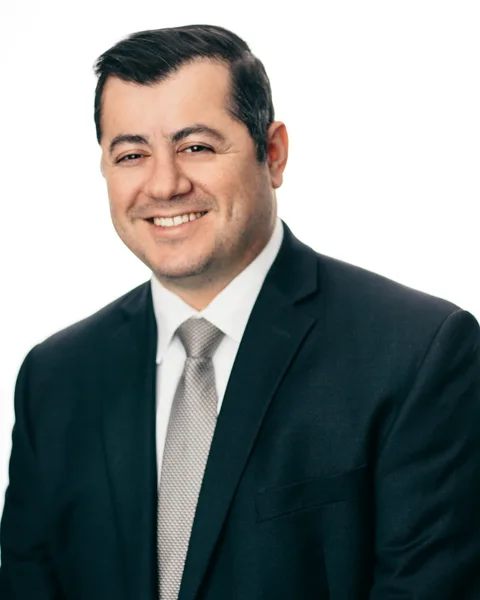
Your Attorney
Frank Younes
Every page on this site is written by Frank Younes, a Nebraska trial attorney with a published record of verdicts and settlements, selection to the National Trial Lawyers Top 100, and a practice that covers every county in Nebraska and Iowa. No case is handed to an associate — the lawyer you read here is the lawyer who works your case.
More about Frank → · Free consultation: (402) 378-9208