Riders in Lincoln know the risks better than anyone, and they know the reaction that follows a crash: the assumption that the rider must have been going too fast. I’m Frank Younes, and I represent motorcyclists injured by other drivers across Nebraska and Iowa. This page covers what the City of Lincoln’s own crash data shows, the Nebraska rules that apply to riders and to the drivers around them, the helmet law as it stands now, and how a motorcycle claim actually gets paid. My Lincoln personal injury page covers the court, the deadlines and the rest of my Lincoln practice.
How Often Lincoln Riders Are Seriously Hurt
The City of Lincoln analyzed ten years of its own crash data, 2014 through 2023, for its Safe Streets planning. In the City’s figures, motorcyclists made up just 0.1 percent of trips to work but 19 percent of the crashes in which someone was killed or seriously injured (City of Lincoln, Safe Streets presentation, September 2025). Few people ride, and those who do are badly overrepresented among the most serious crashes.
Statewide, the Nebraska Department of Transportation’s year-end reports count the motorcyclists killed each year:
| Year | Motorcyclists killed in Nebraska |
|---|---|
| 2021 | 21 |
| 2022 | 29 |
| 2023 | 22 |
| 2024 | 32 |
| 2025 | 21 (year-end report) |
Nationally, the National Highway Traffic Safety Administration reports that “in 2024 there were 6,228 motorcyclists killed,” and that per mile traveled, “the fatality rate for motorcyclists (28.00) was almost 27 times the passenger car occupant fatality rate (1.05)” (NHTSA, Motorcycles: 2024 Data).
The Left Turn That Causes So Many of These Crashes
One kind of crash dominates. NHTSA’s 2024 figures: “In 2024 there were 3,396 two-vehicle fatal crashes each involving a motorcycle and another type of vehicle. In 45 percent (1,532) of these crashes, the other vehicles were turning left while the motorcycles were going straight, passing, or overtaking other vehicles.”
Nebraska law puts that duty on the turning driver, who “shall yield the right-of-way to any vehicle approaching from the opposite direction which is within the intersection or approaching so close as to constitute an immediate hazard” (Neb. Rev. Stat. § 60-6,147). A motorcycle is a vehicle under that rule like any other. “I didn’t see the motorcycle” describes the driver’s failure; the statute contains no exception for it.
Nebraska’s Rules for Riders
A rider “shall have all of the rights and shall be subject to all of the duties applicable to the driver of any other vehicle” (§ 60-6,306). The motorcycle-specific rules are in section 60-6,308:
- The whole lane is yours. “A motorcycle shall be entitled to full use of a traffic lane of any highway, and no vehicle shall be driven in such a manner as to deprive any motorcycle of the full use of such lane.” A driver who drifts into a rider’s lane, or squeezes past in the same lane, is breaking this rule.
- Two abreast is legal; three is not. Motorcycles “may be operated two abreast in a single lane” but “shall not be operated more than two abreast.”
- No lane splitting. “No person shall operate a motorcycle between lanes of traffic or between adjacent lines or rows of vehicles,” and a rider “shall not overtake and pass in the same lane occupied by a vehicle being overtaken.” If a crash happened while splitting lanes, expect the insurer to use this rule against the rider.
- Lights at night. Headlights are required “during the period from sunset to sunrise” and whenever visibility is too poor to see 500 feet ahead (§ 60-6,219).
- The license. “No person shall operate a motorcycle on the alleys or highways of the State of Nebraska until such person has obtained a Class M license” (§ 60-4,127).
Nebraska’s Helmet Law Since 2024
Nebraska ended its universal helmet requirement in 2023, and the Legislature rewrote the conditions again in 2024. Under the current version of section 60-6,279, a rider must wear a helmet meeting the federal standard unless the rider is at least 21 and either holds a Nebraska Class M license with the required safety course on file with the Department of Motor Vehicles (a three-hour online course for licenses issued before May 1, 2024; the basic motorcycle safety course for licenses issued after), or holds a motorcycle license from another state.
- Passengers may ride without a helmet only if they are at least 21 and the operator also meets those conditions.
- Eye protection is required of every rider, helmet or not: “glasses that cover the orbital region of the person’s face, (b) a protective face shield attached to a protective helmet, (c) goggles, or (d) a windshield on the motorcycle or moped that protects the operator’s and passenger’s horizontal line of vision in all operating positions.”
- The penalty is a $250 fine, and officers may enforce it “only as a secondary action” after stopping a rider for something else (§ 60-6,282).
I wrote about the change in more detail in Nebraska’s helmet law and your injury claim.
Will Not Wearing a Helmet Hurt My Claim?
Insurers will try. The law is less helpful to them than they suggest.
- No statute says it reduces your recovery. Nebraska has a statute for seat belts: evidence that a car occupant was unbelted “shall not be admissible in regard to the issue of liability or proximate cause but may be admissible as evidence concerning mitigation of damages, except that it shall not reduce recovery for damages by more than five percent” (§ 60-6,273). That statute covers seat belts only. There is no equivalent statute for motorcycle helmets.
- No reported Nebraska decision addresses it. I have found no Nebraska appellate opinion deciding whether a rider’s lack of a helmet reduces damages. The question is open, and an insurer that claims otherwise should be asked for its authority.
- It cannot matter for injuries a helmet would not have prevented. A broken leg, a road-rash injury or a shoulder injury has nothing to do with a helmet. Even where the question is raised, it is about head injuries.
- Riding legally without a helmet is legal. A rider who meets the statute’s conditions has done nothing unlawful.
None of that is an argument against helmets. NHTSA estimates that “helmets are estimated to be 37-percent effective in preventing fatal injuries to motorcycle riders and 41-percent effective for motorcycle passengers” (NHTSA). Among motorcyclists killed in 2024 in states without a universal helmet law, known helmet use “ranged from 27 percent (Iowa) to 75 percent (Alaska and Nebraska).”
The Bias Against Riders, and How It Is Answered
The assumption that riders are reckless shows up in adjusters’ offers and in jury rooms, and Nebraska’s fault rule gives it teeth. A rider’s recovery is reduced by any share of fault assigned to the rider, and barred entirely if that share equals or exceeds the defendants’ combined fault (§ 25-21,185.09). An insurer that can argue a rider was speeding or lane splitting is arguing to pay less, or nothing.
The answer is evidence gathered early: helmet and dashcam video, the vehicle data from the car that turned, nearby business cameras, independent witnesses, the damage pattern on the bike, and a reconstruction where the speeds are disputed. How that evidence is found and preserved is covered in dashcam video, phone records and vehicle data.
My published results include no Lincoln motorcycle case yet. These are results in other motor vehicle cases across Nebraska. Past results do not guarantee a similar outcome; every case is different.
Insurance When You Ride
Nebraska’s minimum liability coverage is $25,000 per person (§ 60-310), and motorcycle injuries routinely cost far more. That makes your own coverage unusually important.
- Your motorcycle policy must carry uninsured and underinsured motorist coverage. Nebraska’s uninsured motorist law uses the motor vehicle definition from section 60-501, which covers “any self-propelled vehicle which is designed for use upon a highway,” and its exclusions name mopeds and bicycles, not motorcycles. The requirement reaches any liability policy “with respect to any motor vehicle principally garaged in this state” (§§ 44-6404, 44-6408). See underinsured motorist coverage.
- Check that the bike is actually insured. A household car policy’s uninsured motorist coverage does not apply to an injury “while occupying a vehicle owned by, but not insured by, the named insured or a spouse or relative residing with the named insured” (§ 44-6413). A motorcycle that isn’t listed on any policy can leave a rider without that protection.
- Hit-and-run drivers. When the driver is never identified, uninsured motorist coverage can still pay. If the vehicle actually struck you or your bike, the unknown vehicle counts as uninsured. If it caused the crash without touching you, such as a car that ran you off the road, the law adds two conditions: the crash must have been reported “as required by law, to the proper law enforcement authorities,” and the facts must be “corroborated by competent evidence provided by an independent and disinterested person and not by the insured” (§ 44-6405). Get the names of witnesses at the scene.
When a City Vehicle Is Involved
If the vehicle that hit you belonged to the City of Lincoln or another local government, including a city bus, the claim runs under the Political Subdivisions Tort Claims Act. A written claim must be made to the governing body within one year (§ 13-919), far sooner than the four years for an ordinary claim, and recovery is limited to $1 million per person and $5 million per occurrence (§ 13-926).
Deadlines
- Four years for most injury claims against another driver (§ 25-207).
- Two years after the death for a wrongful death claim (§ 30-810).
- One year for a written claim against a city, county or other political subdivision.
The full list, with the statutes, is in my Nebraska deadline guide.
What to Do After a Motorcycle Crash in Lincoln
- Get checked, even if you rode away. Adrenaline hides injuries.
- Leave the bike as it is until it has been photographed and inspected. Do not let it go to salvage.
- Keep your helmet and gear. Damage to them shows how the crash happened.
- Save any helmet-camera or dashcam footage before the card is reused, and note the businesses nearby with cameras.
- Get witness names, especially if the driver who caused it left or never touched you.
- Do not give the other driver’s insurer a recorded statement or accept an early offer. See recorded statements and the first settlement offer.
- Find every policy: yours, a household member’s, and the bike’s.
My main motorcycle accident page covers the claim from start to finish, and riders with life-changing injuries should also read catastrophic and serious injuries.
Statutes and reports quoted on this page were read at their official sources in October 2026. This page is general information, not legal advice about your situation.
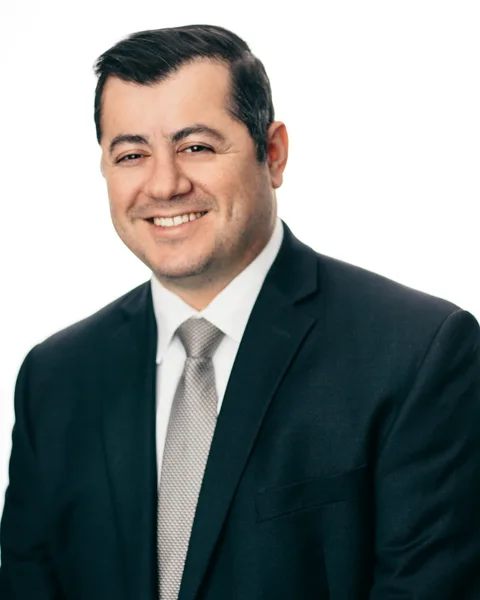
Your Attorney
Frank Younes
Every page on this site is written by Frank Younes, a Nebraska trial attorney with a published record of verdicts and settlements, selection to the National Trial Lawyers Top 100, and a practice that covers every county in Nebraska and Iowa. No case is handed to an associate — the lawyer you read here is the lawyer who works your case.
More about Frank → · Free consultation: (402) 378-9208
Frequently Asked Questions
Do I need a motorcycle accident lawyer in Lincoln?
If you were hurt, a free consultation is worth it. Riders face an insurer bias that drivers don’t, the injuries are usually serious, and the insurance layers matter more.
Who is at fault when a car turns left in front of a motorcycle?
Usually the turning driver, who must yield to an oncoming vehicle within the intersection or close enough to be an immediate hazard. Fault can be shared if the rider was speeding.
Is lane splitting legal in Nebraska?
No. Riding between lanes of traffic or rows of vehicles is prohibited, and so is passing in the same lane as the vehicle being passed.
Do I have to wear a helmet in Nebraska?
Not if you are at least 21 and hold a Class M license with the required safety course on file, or a motorcycle license from another state. Eye protection is required of every rider.
Can not wearing a helmet reduce my settlement?
No Nebraska statute or reported decision says so. The seat-belt statute that limits damages reductions does not apply to helmets. Insurers may still argue it for head injuries.
What if the driver who hit me drove off?
Your own uninsured motorist coverage can pay. If there was no contact, the crash must have been reported to police and confirmed by an independent witness.
How long do I have to file?
Four years for most claims against another driver, and a written claim within one year if a city vehicle was involved.
More in This Series
My Lincoln practice, and the pages riders ask about most.
Hurt on Your Motorcycle in Lincoln? Let’s Get the Evidence First.
Free, confidential consultation — in English or Spanish. No fee unless I win.
Call (402) 378-9208