If you have been diagnosed with non-Hodgkin lymphoma — or any of the dozens of blood cancers that fall under that umbrella — and you were exposed to Roundup at any point in your life, you may have a legal claim against the company that made it. I sign Roundup clients across Nebraska and Iowa, the case review is free, and you pay nothing unless there is a recovery. That is the whole pitch. The rest of this page explains what the claim actually is, who qualifies, and why the exposure part is broader than almost everyone assumes.
What Roundup Is and Why It Ended Up in Court
Roundup is the most widely used herbicide in American history. Its active ingredient, glyphosate, was introduced by Monsanto in 1974 and became inseparable from modern row-crop agriculture in the 1990s, when Monsanto began selling “Roundup Ready” corn and soybean seed engineered to survive being sprayed with it. Farmers could suddenly spray entire fields — crop and all — and only the weeds died. Use exploded, and nowhere more than here: the overwhelming majority of corn and soybean acres in Nebraska and Iowa are planted in glyphosate-tolerant varieties, and the product is just as common off the farm — road ditches, rail lines, golf courses, parks, school grounds, and the garage shelf of nearly every acreage in the state.
In March 2015, the International Agency for Research on Cancer — the World Health Organization’s cancer research arm — classified glyphosate as “probably carcinogenic to humans” (Group 2A), citing an association with non-Hodgkin lymphoma. Monsanto — and Bayer, which bought Monsanto in 2018 — has disputed that classification ever since, pointing to the EPA’s contrary position. Juries who heard the internal evidence saw it differently: in 2018 and 2019, three separate juries returned verdicts against Monsanto for California users who developed non-Hodgkin lymphoma, with punitive awards that made national news. In 2020, Bayer announced a settlement program of approximately $10 billion to resolve the claims then on file — one of the largest product settlements in American history. New cases have been filed steadily ever since, because non-Hodgkin lymphoma keeps being diagnosed in people who sprayed, worked around, or lived next to this product decades ago.
You Did Not Have to Be the One Holding the Sprayer
This is the point I most want Nebraskans to hear, because it is the reason qualifying people never call. The exposure that matters in these cases is exposure, not employment as an applicator. You may have a claim if you personally mixed and sprayed Roundup on a farm, an orchard, a golf course or your own yard — but also if you were around its use:
- You lived next to sprayed ground. A house or acreage bordering row-crop fields, a vineyard, an orchard or a nursery — drift does not stop at the property line, and neither does the dust that carries residue off a field.
- You lived near, worked at, or spent years on a golf course, park, or school campus where grounds crews sprayed it season after season.
- You worked in agriculture without ever spraying — walking beans, detasseling, moving irrigation pipe, harvesting, working a co-op or elevator where treated grain and spray equipment moved through.
- You gardened with it at home — the consumer bottle from the hardware store counts, and thirty summers of spot-spraying a fence line adds up.
- Someone in your house used it heavily and you handled the clothes, the equipment, or the laundry — the same take-home pathway I litigate in asbestos cases.
In a state where the fields come up to the edge of town — and sometimes to the edge of the backyard — proximity exposure is not the exception. It is the ordinary Nebraska biography. If you grew up rural, worked rural, or lived rural anywhere in Nebraska or Iowa between the 1970s and today, you were almost certainly around glyphosate; the legal question is how much, for how long, and what you were later diagnosed with.
Who Qualifies
A Roundup claim has two pillars, and I evaluate both in the free review:
- A qualifying diagnosis. The litigation centers on non-Hodgkin lymphoma — but “NHL” is an umbrella over dozens of separately named cancers, from diffuse large B-cell lymphoma to chronic lymphocytic leukemia to hairy cell leukemia to mycosis fungoides. Many people with a qualifying diagnosis have never heard the phrase “non-Hodgkin lymphoma” applied to it. I keep a dedicated page listing every qualifying cancer and subtype, current through the February 2026 litigation list — check it, or just call and read me your pathology report.
- A real exposure history. Not a single afternoon — a period of use or proximity that a lifetime in this state supplies more often than not. Occupational spraying, farm childhood, acreage living, grounds work, years of home use: it all counts, and I help you reconstruct it. People underestimate what can be documented — plat maps, aerial photos, employment records, co-op accounts, family testimony and your own memory go further than you would think.
The Science, in Plain Language
You do not need a toxicology degree to understand why these cases exist. Glyphosate’s association with non-Hodgkin lymphoma comes out of decades of epidemiology on the people most exposed to it — farmers, applicators and agricultural workers — across studies in the United States, Canada and Scandinavia. IARC’s 2015 working group weighed that human evidence alongside animal studies and mechanistic data on how glyphosate and its formulations behave in living cells, and a widely cited 2019 meta-analysis of the exposed-worker studies reported meaningfully elevated lymphoma risk among the most heavily exposed. On the other side sits the EPA’s assessment that glyphosate is not likely carcinogenic, and Bayer’s insistence that the regulatory view should end the matter. That disagreement between the world’s cancer agency and the American regulator is precisely what juries were asked to resolve — and, three times in a row in 2018 and 2019, they resolved it against Monsanto after seeing the company’s internal documents. A claim does not require certainty about your individual cell biology; it requires the diagnosis, the exposure, and the science connecting the two at the level the law demands. Building that connection is my job, not yours.
How the Exposure Gets Proven
People assume their exposure is unprovable because nobody kept a spray diary. In practice, the record is richer than memory suggests. Commercial applicators and co-ops kept application and purchase records; farm operations left paper at the FSA office, the elevator and the input supplier; golf courses and municipalities kept maintenance logs and budgets; counties documented right-of-way spraying programs. Aerial photography and plat records establish exactly which fields bordered your house and when. And testimony — yours, your family’s, the neighbor who ran the sprayer — has carried exposure cases since long before anyone digitized anything. When I take a Roundup case, reconstructing the exposure history is part of the representation: you tell me where you lived and worked, and I go find the paper that proves what was in the air and on the ground there.
What the Supreme Court Changed in 2026 — and What It Did Not
Straight talk, because most law-firm pages will not give it to you. On June 25, 2026, the U.S. Supreme Court decided Monsanto v. Durnell, holding 7–2 that federal pesticide-labeling law preempts one particular legal theory — the claim that Monsanto should be liable for failing to put a cancer warning on the label. That was a real win for Bayer, and it narrowed these cases.
Here is what it did not do. It did not decide that Roundup is safe, it did not erase the science, and it did not end the litigation. Roundup cases have always rested on more than the label: design-defect and negligence theories — that the product itself was unreasonably dangerous as designed — were not before the Court and continue. The federal multidistrict litigation is still accepting new claims, thousands of cases remain active, and new filings have continued all summer. What Durnell really changed is urgency: the legal landscape is being contested in real time, and a claim evaluated and preserved now is worth more than one that waits for perfect clarity that may never come. I follow this litigation closely precisely so my clients do not have to.
What a Claim Is Actually For
Cancer is expensive in ways people do not say out loud. Treatment costs run through insurance and then past it. Work stops or shrinks. A spouse cuts hours to drive to appointments. Nobody budgets for any of it. A Roundup recovery exists to answer exactly that arithmetic: the medical bills behind you and ahead of you, the income the disease took, the human cost of what you and your family have carried — and, candidly, a cushion that outlasts you. I have sat with too many Nebraska families who fought the disease bravely and left the money question unasked until it was too late to ask it. Asking it costs you nothing and takes one phone call.
What Signing Up Involves — and What It Costs
Less than you fear, on both counts. The process from your side: a conversation about your diagnosis and your exposure history; your pathology report and basic oncology records, which I help collect; and your signature. I do the rest — the exposure documentation, the filing decisions, the litigation posture, the settlement evaluation when that day comes. You do not travel, you do not sit in a deposition unprepared, and you do not front a dollar. The representation is contingency only: no fee unless there is a recovery, and the review that tells you whether you have a case is free either way. If you are in treatment, your job is treatment. This is mine.
The Deadlines Are Real
Nebraska generally gives a product-liability claim four years and a wrongful-death claim two, and Iowa is shorter still — two years for both, under Iowa Code § 614.1(2). When those clocks start is its own legal question in a latent-disease case — diagnosis, discovery, and death each matter — and I would rather you let me answer it than guess. What I can say flatly: every month between diagnosis and phone call is a month of evidence getting colder and a month of deadline burning. The call is free. Make it early.
If You Lost Someone
Non-Hodgkin lymphoma takes people — fathers who farmed, mothers who kept the garden down, grandfathers who sprayed the ditches for the county. A qualifying diagnosis followed by death does not end the claim; it changes who brings it. A wrongful-death and estate claim can recover what the disease cost your family, and the exposure history can be rebuilt without the person who lived it — I do it with land records, employment histories and the testimony of the people who were there. The deadlines on death claims are the shortest in this area of law, so if this paragraph is the one that describes your family, please treat the call as time-sensitive.
Why a Nebraska Lawyer Instead of a TV Number
You have seen the national ads. Here is the difference. When you call the number on television, you become a row in an intake spreadsheet, your case is referred somewhere you will never visit, and the first lawyer who actually reads your file may be in another time zone. When you call me, you get me — a Nebraska trial attorney who knows what walking beans means, knows which counties run corn against the fence line, can drive to your kitchen table in any county in Nebraska or Iowa, and answers his own phone at (402) 378-9208. Roundup litigation is national, but your exposure happened on real ground in a real county here, and it should be documented by someone who can find that ground on a map. My record — verdicts, settlements, and the reviews of the clients who lived them — is published on this site for you to check.
What to Have Ready When You Call
Nothing is required — call with what you have. But if you want a head start: your pathology report (the document that names your exact diagnosis — the wording matters, as the qualifying cancers page explains); the rough years and places of your exposure — the farm, the acreage, the course, the addresses next to sprayed ground; and any records that anchor it — employment history, land records, even family photographs of the sprayer in the machine shed. If your diagnosis was years ago, call anyway. If your exposure feels “too indirect,” call anyway — that judgment is exactly what the free review is for.
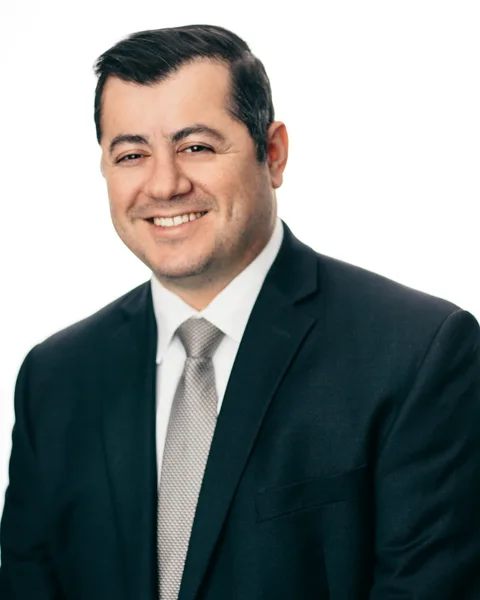
Your Attorney
Frank Younes
Every page on this site is written by Frank Younes, a Nebraska trial attorney with a published record of verdicts and settlements, selection to the National Trial Lawyers Top 100, and a practice that covers every county in Nebraska and Iowa. No case is handed to an associate — the lawyer you read here is the lawyer who works your case.
More about Frank → · Free consultation: (402) 378-9208
Frequently Asked Questions
I never personally sprayed Roundup. Can I still have a claim?
Potentially, yes. Exposure is the question, not job title — living beside sprayed fields, years on or near a treated golf course or park, farm work around the product, and heavy household use in your home can all support a claim. Tell me your history and let me make the call.
Does chronic lymphocytic leukemia (CLL) count?
Yes — CLL and its twin, small lymphocytic lymphoma (SLL), are on the qualifying list, along with dozens of other named subtypes. Many people with qualifying blood cancers were never told the phrase “non-Hodgkin lymphoma.” Check the full qualifying list or read me your pathology report.
Did the 2026 Supreme Court decision end Roundup lawsuits?
No. Monsanto v. Durnell (June 2026) cut off one theory — failure-to-warn based on the label — but design-defect and negligence claims continue, the federal litigation is still accepting cases, and new claims are still being filed. It did make timing matter more.
What does it cost to find out if I qualify?
Nothing. The case review is free, and the representation is contingency-only — no fee unless there is a recovery. You will never receive a bill from me for looking.
I was diagnosed years ago. Is it too late?
Maybe not — when the clock started is a legal question involving diagnosis and discovery, and it deserves a lawyer’s answer, not a guess. But deadlines in Nebraska and Iowa are real and Iowa’s are short, so call now rather than next season.
My father died of lymphoma after a lifetime of farming. Can our family still bring a claim?
Possibly — a wrongful-death and estate claim can be brought by the family, and I can rebuild the exposure history from land records, work history and the people who knew him. Death-claim deadlines are the shortest in this field, so please call promptly.
More on Toxic Exposure
The rest of the exposure series on this site.
Diagnosed With Lymphoma? Find Out If You Qualify
Free, confidential consultation — in English or Spanish. No fee unless I win.
Call (402) 378-9208