What happened
A 14-year-old boy was run over and left in a field Thursday evening after a driver chased him and two other boys off the road near 205th and Harrison Streets in west Omaha. According to the Douglas County Sheriff's Office, deputies were called shortly before 6:30 p.m. Thursday, September 3, to a reported crash in the area of 205th and Harrison. They found three boys — ages 14, 12 and 10, according to 3 News Now — who had been riding electric dirt bikes illegally on a side road. A driver behind them, described by deputies as frustrated, honked at the boys. The boys jumped a curb to get away from him. The driver followed them off the road, up Roosevelt Street and into a nearby field. One of the boys, the 14-year-old, fell off his bike, and the driver ran over him. Deputies say the driver then chased one of the other boys before leaving the scene. The 14-year-old was taken to a hospital with a leg injury described as non-life-threatening. (WOWT; 3 News Now; DCSO)
The driver has not been found. Deputies describe the vehicle as a black, four-door Jeep Wrangler, and say they are reviewing footage from license-plate cameras at 204th and Harrison to identify it. The sheriff's office said felony charges are likely if the driver is located, and is asking anyone with information to call 402-444-6000. Capt. Nate Kovarik of the sheriff's office told 3 News Now that watching someone commit a traffic infraction does not justify a driver taking matters into his own hands. Nobody has been arrested or charged, and every characterization of the driver in this article comes from the sheriff's preliminary account and is conditional on it.
Our condolences
Three kids were out on their bikes on a Thursday evening in the last week of summer, doing something they should not have been doing, the way 10- and 12- and 14-year-olds do. What should have followed was a honk and a lecture from a parent. What followed instead was a grown man in a Jeep chasing children into a field, driving over one of them, chasing another, and leaving. Our thoughts and prayers are with that boy and his family, and with the two other boys, who watched it happen and will not forget it. We are grateful he is going to be all right, and we hope the deputies find the driver soon.
Safety context
Leaving the scene is not a rare act. The AAA Foundation for Traffic Safety's research on hit-and-run crashes, drawing on NHTSA data, found that in 2023 more than 900,000 police-reported crashes — about 15 percent of all crashes — involved a driver who left the scene. Those crashes injured more than 240,000 people and killed 2,872, about 7 percent of everyone who died on American roads that year. Most hit-and-run drivers are running from a mistake. This one, if the sheriff's account holds, was running from something he did on purpose.
Nebraska law is not ambiguous about the duty to stay. Under Neb. Rev. Stat. § 60-697, the driver of any vehicle involved in an accident that injures someone must immediately stop, identify himself, and render reasonable assistance to the injured, including arranging medical care. Under § 60-698, failing to do so is a Class III felony when the crash results in death or serious bodily injury, and a conviction carries a driver's license revocation of one to fifteen years on top of any prison sentence.
Two practical notes, one for each side of this. For parents: electric dirt bikes and the newer class of high-powered e-bikes are, in most Nebraska circumstances, not street-legal for kids to ride on a public road, and the reason is not bureaucratic — it is that a 12-year-old on a machine that will do 30 miles an hour is in traffic he cannot read yet. For drivers: a kid doing something illegal on a bike in front of you is an annoyance, not a threat, and the moment you leave the roadway to pursue him you have stopped being a driver and become something the law treats very differently.
The rights of families after an incident like this
I want to talk plainly about the road rage and about the liability, because families in this position get both wrong in the same predictable ways.
Most of what appears on these pages is about negligence — someone careless, no one meaning harm. This is not that. If the sheriff's account is accurate, a driver left the road on purpose, followed children into a field on purpose, and drove over one of them. The law has a different name for that than "accident," and calling it by the right name changes three things families in this situation need to understand.
First, it changes the answer to the question everyone raises immediately: "but the kids were riding illegally." That is true, and this article does not pretend otherwise; the sheriff said so. In an ordinary crash, that fact would matter a great deal, because Nebraska's comparative negligence rules reduce a claimant's recovery by his own share of fault and cut it off entirely at 50 percent. But comparative negligence is a defense to a negligence claim. It is not a defense to an intentional act. A boy's traffic infraction does not license a grown man to run him down, and a claim brought for battery — for deliberately driving a vehicle into a person — is not reduced because the person was somewhere he should not have been. That is the whole point Captain Kovarik was making, and the civil law makes it too.
Second, it changes who pays, in a way that families never see coming. Nearly every auto liability policy contains an exclusion for injuries the insured causes intentionally. So the very thing that makes this driver more culpable — that he meant to do it — is the thing his own insurance company will cite to refuse to cover him. A family that assumes the driver's insurer will step in can find themselves, months later, with a judgment against a man who has no coverage and few assets. There are answers to that problem, and they have to be built early: proving the case in the alternative as reckless or negligent conduct where the facts support it, so that coverage is not lost on a label, and — critically — looking to the family's own policy. Nebraska requires uninsured and underinsured motorist coverage in auto policies under § 44-6408, and a family's own UM coverage is very often the route to compensation when the responsible driver is unidentified, uninsured or excluded from coverage. Whether and how that coverage applies to a hit-and-run in a field depends on the policy language and on facts not yet known, and nobody at the insurance company is going to volunteer it.
Third, it changes what the family can and cannot recover. Nebraska is one of a small number of states whose constitution does not permit punitive damages in civil cases — the kind of damages meant to punish rather than compensate. Families in a case like this often assume the outrageousness of the conduct will be reflected in the award. In Nebraska, it will not be, except insofar as the boy's actual injuries, his medical care, and the fear and trauma of being hunted by a vehicle are themselves compensable. Those are real, and a 14-year-old who was chased and run over has suffered more than a leg injury. But the punishment for what this driver did, if he is found, belongs to the criminal court, not the civil one.
All of that is conditional on the driver being found, which is why the license-plate camera footage at 204th and Harrison, the accounts of the two boys who saw it, any doorbell or dashboard video along Roosevelt Street, and the physical evidence in that field matter as much to the civil case as to the criminal one. And it is conditional on the sheriff's preliminary account being borne out. Nobody has been charged. If the driver is located and tells a different story, the analysis above changes.
Learn more about your rights: if this touches your family, it may help to read about how cases are built when a vehicle strikes a child on foot, a bike or a scooter, about what happens when the driver who hurt you cannot be found or is not covered, and about the work I do for families across the Omaha metro.
How I help families in crisis
Parents whose son was run over and left in a field are not in a position to navigate an intentional-acts exclusion, and they should not have to learn what one is. That is what I take off their shoulders.
In a case like this it means moving on two tracks at once. The first is evidence: making sure the sheriff's office has everything that can identify the driver, and separately preserving what the civil case will need — the boys' accounts while they are fresh, the camera footage before it overwrites, the injury documentation, and the field itself. The second is coverage: pulling the family's own auto policy on day one, putting the UM carrier on notice, and building the claim in a form that survives whatever coverage fight is coming. It means dealing with every insurer so the parents do not, and making sure a 14-year-old's medical care is not delayed while adults argue about who pays.
And it means telling the family the truth about what Nebraska law can and cannot do — including that the outrage everyone feels about this will not show up as a punitive award, and that the real measure of the case is the harm done to their son.
Over my career I have recovered more than $23 million for injured people and grieving families, earned countless five-star reviews from clients and endorsements from fellow attorneys, and been honored as part of a Best of Omaha personal injury team in 2025 and 2026.
If this was your boy — or if you are one of the two who saw it — call me and let's talk about what happened and where you stand. There is no charge for the conversation, no obligation after it, and if I take the case I am paid only out of what I recover.
Frequently asked questions
- What happened in the road-rage hit-and-run near 205th and Harrison in West Omaha?
- A 14-year-old boy was run over and left in a field Thursday evening after a driver chased him and two other boys off the road near 205th and Harrison Streets in west Omaha. According to the Douglas County Sheriff's Office, deputies were called shortly before 6:30 p.m. Thursday, September 3, to a reported crash in the area of 205th and Harrison.
- What are the rights of families after an incident like this?
- I want to talk plainly about the road rage and about the liability, because families in this position get both wrong in the same predictable ways. Most of what appears on these pages is about negligence — someone careless, no one meaning harm.
- How does Frank Younes help families after something like this?
- Parents whose son was run over and left in a field are not in a position to navigate an intentional-acts exclusion, and they should not have to learn what one is. That is what I take off their shoulders. In a case like this it means moving on two tracks at once.
Related coverage
30-Year-Old Man Critically Injured in Hit-and-Run at 76th and Dodge in Omaha
11-Year-Old Bennington Boy Dies After Scooter Struck by Pickup Truck Near 179th and Island Road
Driver Dies After Two-Vehicle Crash at West Center Road and 222nd Street in Elkhorn/West Omaha
Your Attorney
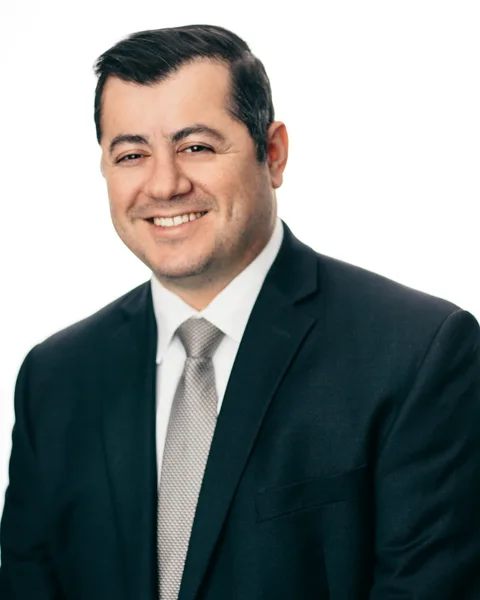
Frank Younes
Every page on this site is written by Frank Younes, a Nebraska trial attorney with a published record of verdicts and settlements, selection to the National Trial Lawyers Top 100, and a practice that covers every county in Nebraska and Iowa. No case is handed to an associate — the lawyer you read here is the lawyer who works your case.
More about Frank → · Free consultation: (402) 378-9208