What happened
A man was seriously injured Wednesday morning when a two-vehicle crash in south Lincoln left one of the vehicles resting on its roof. Lincoln police were called at about 6:45 a.m. Wednesday, September 2, to Old Cheney Road at Hunts Drive — a short distance west of the Old Cheney Road and Warlick Boulevard intersection — for a collision involving a Chevrolet Traverse and a Mazda. One of the two vehicles rolled in the crash and came to rest upside down. A male driver was taken to the hospital with injuries police described as serious but non-life-threatening. Old Cheney Road was closed for roughly two hours while officers investigated and crews cleared the scene, and has since reopened. Lincoln police have not released the names or ages of anyone involved, have not said which vehicle rolled, have not stated a cause, and — according to KLKN — did not say whether any citations were issued. The investigation is ongoing. (1011 NOW; KLKN)
The timing and the place are worth noting, because they shape what happened next for everyone involved. Quarter to seven on a Wednesday is the front edge of the morning commute on Old Cheney, an arterial that carries a heavy volume of Lincoln traffic east and west across the south side of the city and feeds directly into Warlick Boulevard a few hundred feet to the east. A crash there at that hour is a crash in traffic, with witnesses — drivers who were stopped behind it, drivers who saw the approach, people in the businesses and homes along that block. Those witnesses scattered to work within minutes and, unless someone took their names at the scene, are effectively unreachable a week later.
Our condolences
A man got up on an ordinary Wednesday, drove a route he has probably driven a thousand times, and ended up hanging in a seatbelt in an overturned vehicle before seven in the morning. Whatever "serious but non-life-threatening" turns out to mean for him — and that phrase covers a great deal of ground, from broken bones to a spine injury to a head injury that has not fully declared itself yet — his life changed in the space of about two seconds. Our thoughts are with him and with his family, who got a phone call this morning that nobody is ever ready for, and with the other driver, who is carrying their own version of this day. We're glad the Lincoln Fire and Rescue crews and the officers who closed the road got there fast, and glad this is a story about an ambulance and not a coroner.
Safety context
There is a reason a rollover reads as frightening even when everyone survives it: it is, by a wide margin, the most lethal thing an ordinary passenger vehicle can do. According to NHTSA's Traffic Safety Facts on passenger vehicles, crashes in which the vehicle rolled over accounted for 28 percent of all passenger vehicle occupant deaths in 2023 — better than one fatality in four — despite rollovers making up a tiny fraction of crashes overall. The risk is not spread evenly across the fleet, either. Among passenger vehicle occupants killed that year, the share who died in a vehicle that rolled was highest in pickups at 38 percent, followed by SUVs at 33 percent, vans at 25 percent, and passenger cars at 20 percent. Taller, narrower, higher-riding vehicles roll more readily, and once one starts to go over, an occupant's survival depends heavily on staying inside it.
Most people picture a rollover as something that happens at highway speed on a rural curve. Plenty happen exactly the way this one appears to have happened — in town, in traffic, at an intersection, at a speed that would be entirely survivable in a straight-line impact. What flips a vehicle in that setting is usually a trip: a side impact that pushes it sideways until a tire catches on pavement or a curb, and the vehicle rotates over its own wheels. That is why a crash at 6:45 a.m. on a city arterial can put someone upside down.
Statewide, 228 people were killed on Nebraska roads in 2025, down from 251 in 2024, according to NDOT's 2025 Annual Report — improvement, though the state's rate is falling more slowly than the nation's. The practical takeaways for an intersection like this one are the dull ones that keep working: wear the belt on every trip, including the four-minute one to work, because the belt is what keeps you inside the vehicle if it goes over; approach a green light expecting someone to turn across you; and give yourself the extra ninety seconds so you are not the driver deciding whether the gap is big enough.
The rights of families after a crash like this
In crashes like this one, an injured driver typically has a claim against the other driver's liability insurance for medical bills, lost income, and pain and suffering — and, where the at-fault driver's coverage is too small to cover the harm, a separate claim under the injured person's own underinsured motorist coverage, which is a benefit he already paid for and is often unaware he can use.
What makes this particular situation delicate is that fault is genuinely open. Lincoln police have said they are still investigating the cause and have not indicated that anyone has been cited. That posture — an intersection crash, two vehicles, no determination, no names — is the single most common way an injured person is quietly maneuvered into a bad outcome, and it happens in the first week rather than in a courtroom. An adjuster calls while he is medicated and sore, asks for a recorded statement "just to get your side," and asks questions whose purpose is to get him to guess about his speed, about how long the light had been green, about whether he saw the other car before impact. He guesses, because he is trying to be helpful. Those guesses are quoted back to him for the next two years.
Nebraska's rule makes that especially costly. Under Neb. Rev. Stat. § 25-21,185.09, this state uses modified comparative negligence: any negligence chargeable to the injured person reduces his recovery proportionally, and if his share of the fault is equal to or greater than the combined fault of everyone he is claiming against, he recovers nothing at all. Not a reduced amount — nothing. In a two-vehicle intersection crash with no independent determination, the entire case can turn on where that percentage lands, which means an insurer has a direct financial incentive to build a fifty-percent argument out of an injured man's honest, uncertain, half-sedated recollection.
If the reporting that one vehicle rolled and came to rest on its roof is accurate, that fact carries evidentiary weight, and it is worth preserving specifically. A vehicle does not usually roll in a low-speed intersection collision without a meaningful lateral force, and the direction of that force, the location of the crush damage, the final rest positions, the gouge and scuff marks on the pavement and the debris field all speak to how the vehicles came together and at what speed. Those marks last days, not months. Both vehicles will carry event data recorders capturing speed, braking and belt use in the seconds before impact, and both are headed for a salvage yard. And Old Cheney at Hunts Drive is not an empty rural crossroads — there were people watching, and there may be business or residential video that overwrites itself on a seven- or thirty-day loop.
Nebraska generally allows four years to bring a personal injury lawsuit under Neb. Rev. Stat. § 25-207, and people take real comfort in that number. They should not take too much. Four years is the deadline for filing paper. The window for capturing the evidence that decides the case closes in the first two weeks, and no statute extends it.
Learn more about your rights: it may help to read about what to do after a serious car crash and how these claims are built, and about how I represent injured people here in Lincoln.
How I help families in crisis
Somebody hurt badly enough to be pulled from an overturned vehicle before seven in the morning should be worrying about his ribs and his scans, not about an adjuster's phone calls. That is the part I take over. My job is to lift the whole administrative weight of a crash off a family's shoulders — the insurers, the recorded statements, the bills arriving from four different providers, the health plan asserting a lien — so the injured person can do the one thing that actually matters in the first month, which is get better.
Concretely, in a case with the shape of this one, that means getting between my client and the other driver's insurance company immediately, so nobody talks him into a guess he cannot take back. It means taking up the shield while the Lincoln Police Department finishes its investigation: obtaining the crash report and any reconstruction, getting preservation letters out before either vehicle is crushed, canvassing for the witnesses and the video along that block of Old Cheney while both still exist, and finding out whether the injuries that read as "serious but non-life-threatening" on day one are going to keep him out of work for six weeks or six months. And it means giving people straight answers, including when the honest answer is that their own case is weaker than they hoped. Nobody is served by an attorney who only delivers good news.
Across my career I have recovered more than $23 million for injured people and grieving families, earned countless five-star reviews from clients and endorsements from fellow attorneys, and been honored as part of a personal injury team named Best of Omaha in 2025 and 2026.
If this happened to you or to someone in your family, pick up the phone and let's just talk about it — there's no charge for that conversation and no commitment on the other side of it, and in the event I represent you, I'm paid only out of what I recover on your behalf.
Frequently asked questions
- What happened in the rollover crash in Lincoln?
- A man was seriously injured Wednesday morning when a two-vehicle crash in south Lincoln left one of the vehicles resting on its roof. Lincoln police were called at about 6:45 a.m. Wednesday, September 2, to Old Cheney Road at Hunts Drive — a short distance west of the Old Cheney Road and Warlick Boulevard intersection — for a collision involving a Chevrolet Traverse and a Mazda.
- What are the rights of families after a crash like this?
- In crashes like this one, an injured driver typically has a claim against the other driver's liability insurance for medical bills, lost income, and pain and suffering — and, where the at-fault driver's coverage is too small to cover the harm, a separate claim under the injured person's own underinsured motorist coverage, which is a benefit he already paid for and is often unaware he can use.
- How does Frank Younes help families after something like this?
- Somebody hurt badly enough to be pulled from an overturned vehicle before seven in the morning should be worrying about his ribs and his scans, not about an adjuster's phone calls. That is the part I take over. My job is to lift the whole administrative weight of a crash off a family's shoulders — the insurers, the recorded statements, the bills arriving from four different providers, the health plan asserting a lien — so the injured person can do the one thing that actually matters in the first month, which is get better.
Related coverage
Kaycee Kuhn, 43, of Roca Killed When, Deputies Say, a Teen Driver Going 70 mph Failed to Stop at South 82nd Street and Roca Road South of Lincoln
Two Hospitalized After Crash Sends Vehicles Into Home, Hartley Elementary School Wall in Central Lincoln
Driver, 60, Suffers Life-Threatening Injuries in Reported Red-Light Crash at 84th and Dodge in Omaha
Bellevue Woman Killed in Three-Vehicle Crash at Cornhusker Road and 48th Street
Your Attorney
Frank Younes
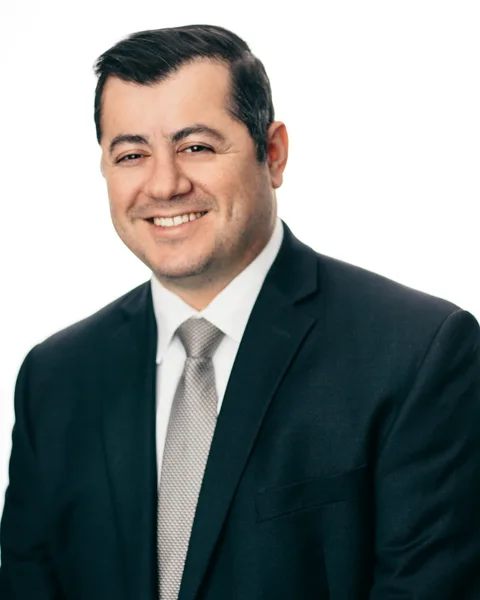
Every page on this site is written by Frank Younes, a Nebraska trial attorney with a published record of verdicts and settlements, selection to the National Trial Lawyers Top 100, and a practice that covers every county in Nebraska and Iowa. No case is handed to an associate — the lawyer you read here is the lawyer who works your case.
More about Frank → · Free consultation: (402) 378-9208