What happened
One person was killed and a second was critically injured Saturday morning when a truck struck their car broadside at the intersection of 204th Street and Bennington Road, in the fast-growing country between Elkhorn and Bennington on the northwest edge of Omaha.
The Douglas County Sheriff's Office responded at about 10 a.m. on Saturday, September 12. According to the sheriff's account as reported by WOWT, a car traveling east on Bennington Road entered the intersection against a stop sign and was struck on the driver's side by a truck traveling south on 204th Street. The driver of the car was pronounced dead at the scene. The other occupant of the car was taken to the Nebraska Medical Center in Omaha with injuries described as life-threatening — the Bennington Buzz, a local publication that also covered the crash, described that person's condition as extremely critical. No names, ages or hometowns have been released by authorities. (WOWT; 1011 NOW; Bennington Buzz)
The two accounts differ on one detail worth stating plainly rather than papering over: WOWT describes the striking vehicle as a semi truck, while the Bennington Buzz describes it as a dump truck. Both are large commercial vehicles, and the distinction matters legally — a long-haul tractor-trailer and a locally operated dump truck sit under different regulatory schemes and often under very different insurance — but as of this writing the public reporting does not settle it.
North 204th Street was closed between Rainwood Road and Highway 36 for hours while the crash was investigated and documented, with 216th Street and 180th Street used as detours. The Douglas County Sheriff's Office says its investigation is ongoing. No findings have been announced, and no charges have been reported against anyone.
Our condolences
Two people got in a car on a clear Saturday morning in September, on a stretch of gravel-and-blacktop section road that thousands of families out there drive without a second thought, and only one of them is going to a hospital. Somewhere in Douglas County a family took a call before lunchtime that ended one life and put another one in the balance at the medical center downtown, and they are living in that second half of the sentence right now, in a waiting room, with nothing to do.
My heart goes out to that family, to the friends who are learning about this over the weekend, and to the neighbors who came out to a section-line intersection they have driven a thousand times and found what was there. I want to say something for the truck's driver as well. Whatever the investigation ultimately concludes, a person went to work Saturday morning and had a car come into their path with no time to do anything about it, and that is a weight they will carry for a long while.
Safety context
Rural section-line intersections like 204th and Bennington are among the most dangerous pieces of road geometry in Nebraska, and the reason is deceptively simple. They are wide-open, sparsely marked crossings where one road stops and the other does not, where speeds stay high because there is nothing to slow anyone down, and where the sight lines that look generous from a distance can be interrupted by a rise, a treeline, a standing crop or a building near the corner. They also sit in exactly the places the Omaha metro is expanding into fastest, which means farm-country intersections are now carrying suburban traffic volumes.
When the vehicle coming through such an intersection is a loaded truck, the outcome is rarely survivable for the people in the car. NHTSA's Large Trucks: 2024 Data fact sheet, published in June 2026, counted 5,340 people killed in traffic crashes involving large trucks in 2024 — a 2.5 percent decrease from 5,478 the year before, but still more than fourteen deaths a day. The number that says the most about crashes like this one: 70 percent of the people killed in large-truck crashes were occupants of other vehicles, not of the truck. A truck weighing twenty or thirty times what a car weighs does not experience a broadside collision the way the car does.
And these crashes are not primarily an interstate problem, whatever the mental picture suggests. NHTSA's figures show that 75 percent of fatal crashes involving large trucks in 2024 occurred on non-interstate roads, and 56 percent occurred in rural areas. The highway is not where most of this happens. County roads are.
If you drive out there — and if you live in Elkhorn, Bennington, Waterloo or anywhere along the 180th-to-216th corridor, you do — the practical advice is worth repeating even though everyone has heard it. Treat every section-line stop sign as a full stop rather than a rolling one, especially the ones you have run a thousand times without incident. Assume any vehicle on the through road is moving faster than it looks and is far heavier than it looks. And give yourself a second look after the first one, because at those crossings a truck approaching in line with a treeline or a low sun can disappear into the background for exactly as long as it takes.
The rights of families after a crash like this
There are two very different legal situations inside this one crash, and they should not be blurred together.
The passenger. If the sheriff's account is accurate — that the car entered the intersection against a stop sign — then the person who is fighting for their life at the medical center did nothing to cause this crash and is in a fundamentally different position from the driver. Under Nebraska's comparative negligence statute, Neb. Rev. Stat. § 25-21,185.09, a claimant's own negligence reduces recovery proportionally and bars it entirely only when that claimant's negligence equals or exceeds the combined negligence of everyone they are suing. A passenger who was simply riding in a car generally has no negligence to charge against them at all. That passenger, or their family, may have claims against the driver of the car they were in — which in practice means that driver's liability insurance or their estate — and, depending on what the investigation shows about the truck's speed, braking, sight lines and whether anything could have been done, potentially against the truck's driver and the company that owns or operates it as well. Those are not competing claims; a passenger can pursue both, and in serious-injury cases they routinely do.
The family of the driver who died. If a wrongful death claim exists for that family, Neb. Rev. Stat. § 30-810 requires it to be brought by the personal representative of the estate, for the exclusive benefit of the surviving spouse and next of kin, and commenced within two years of the death; other claims arising from the crash, including a survival claim, generally fall under the four-year period in § 25-207. Whether such a claim exists at all depends entirely on facts nobody has established yet, and I am not going to pretend otherwise on the strength of one day's reporting. The sheriff's preliminary account of who entered the intersection is a preliminary account. Crash reconstruction sometimes confirms it and sometimes changes it — the truck's speed, whether the stop sign was visible and unobstructed that morning, what the intersection's sight lines actually were, and what any event data recorder in either vehicle recorded are all things that get determined later, by measurement, not on the first afternoon.
Learn more about your rights: if this touches your family, it may help to read about what makes a claim against a commercial truck and its carrier different from an ordinary car crash claim, about what a passenger hurt in someone else's vehicle is entitled to, about how a wrongful death claim works in Nebraska and who may bring one, and about how I work with families across Douglas County and the Omaha metro.
How I help families in crisis
Right now, on the Saturday this happened, there is a family in a hallway at the medical center who have not slept and have not eaten and who are not thinking about lawyers, and they should not be. Nothing in this article is asking them to.
But I have watched what happens over the following two weeks often enough to say what is coming. An adjuster will call, kindly, and ask for a recorded statement while a family is still in shock. A form authorizing release of medical records — all of them, going back years — will arrive looking like paperwork the hospital needs. If a commercial carrier is involved, its insurer will have had an investigator and often a reconstruction specialist at that intersection within hours of the crash, working for the carrier, while the family was still being told what happened. That imbalance is the reason I do this work.
My job is to stand in front of all of that. It means sending preservation letters immediately, so that the truck, its electronic control module, its driver's logs and hours-of-service records, its maintenance file and any dashcam footage are not lawfully destroyed on a routine retention schedule while a family is planning a funeral. It means getting the intersection itself measured and photographed before the season and the crops change what the sight lines were. It means finding every applicable insurance policy — including the underinsured coverage most people do not know they have — and putting each carrier on notice in time. And it means every adjuster, investigator and records request comes to me instead of to a family that is trying to keep watch at a hospital.
That is what I mean when I say my job is to take the stress off a family's shoulders and take up the shield for them: to protect and advocate for the rights of someone who cannot advocate for themselves right now, and to guide the people who love them through a stretch of weeks that nobody is prepared for.
Over my career I have recovered more than $23 million for injured people and grieving families, earned countless five-star reviews from clients and endorsements from fellow attorneys, and been honored as part of a Best of Omaha personal injury team in 2025 and 2026.
If this is your family, call when you are ready and not a moment before — there is no charge for the conversation, no obligation at the end of it, and if there is a case to bring, I am paid only out of what I recover for you.
Related coverage
Jeep Driver Life-Flighted to Omaha After Pickup Runs Stop Sign on Highway 30 in Merrick County, Alcohol Suspected
17-Year-Old Belmond Driver Airlifted After Semi Strikes SUV Broadside at 265th Street and Hancock Avenue in Wright County
Driver, 60, Suffers Life-Threatening Injuries in Reported Red-Light Crash at 84th and Dodge in Omaha
Your Attorney
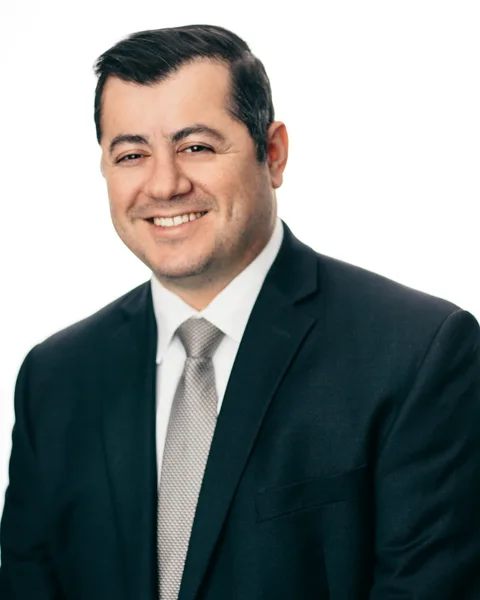
Frank Younes
Every page on this site is written by Frank Younes, a Nebraska trial attorney with a published record of verdicts and settlements, selection to the National Trial Lawyers Top 100, and a practice that covers every county in Nebraska and Iowa. No case is handed to an associate — the lawyer you read here is the lawyer who works your case.
More about Frank → · Free consultation: (402) 378-9208