Of all the injury calls I take, passenger cases have the widest gap between how simple they look and how they go. The passenger did not choose the speed, the lane, or the moment. There is usually no argument about fault at all. And yet these claims stall more often than almost any other kind, for reasons that have nothing to do with who caused the crash.
Reason one: the at-fault driver is somebody you care about
More than half the passengers I represent were riding with a friend, a spouse, a parent, or a coworker. When that driver caused the crash, the claim is against that driver — and people would rather hurt for a year than do that.
Be plain about what is really happening there. You are not suing your friend. You are making a claim against an auto insurance policy your friend bought precisely so this cost would not land on either of you. Your friend's obligation is to report the crash and cooperate; it is not to write a check. The people most afraid of "ruining a friendship" are usually the ones whose friend is quietly horrified that the passenger they hurt is paying their own medical bills.
Reason two: two drivers means two insurers pointing at each other
When two vehicles collide and you were riding in one of them, you are in the unusual position of having a claim that does not depend on which driver was at fault — it may be one, it may be both. But each insurer knows that, and each has an incentive to wait for the other to move first. Months disappear into that standoff while your treatment bills arrive on schedule.
The way through is to develop the liability evidence yourself rather than wait for the carriers to sort each other out: the crash report, the scene and vehicle photographs, the event data from both vehicles, the intersection video before it is overwritten, and the independent witnesses with no stake in either driver's story. Once fault is documented rather than debated, the standoff ends.
Reason three: the coverage is smaller than the injuries
This is the quiet one, and it decides more passenger cases than fault ever does. A serious crash can produce far more medical expense than a minimum-limits policy will ever pay, and if there were several people in the car, that one policy may be divided among all of them.
That is why the first hour of a passenger case is spent finding every layer of coverage that exists rather than just the obvious one. There may be more than one liability policy in play. There may be medical payments coverage. And your own uninsured and underinsured motorist coverage may apply even though you were not driving and the car was not yours — a possibility most passengers never consider, because nothing about the crash felt like it involved their own policy. Whether it does depends on the language of your policy and the facts, which is exactly why somebody should read it early rather than after the liability money is gone. If the ride was an Uber or a Lyft, a different set of commercial policies is in play.
What the insurer will try anyway
Expect two arguments. The first is that your injuries came from somewhere else — an old back, a prior crash, a gap in treatment. The second is comparative fault, because Nebraska reduces a recovery by the injured person's share of the blame and eliminates it entirely at fifty percent. A passenger is rarely a good target for that argument, which does not stop adjusters from reaching for seat belt use or a claim that you distracted the driver. Answer it with records and evidence, not with a recorded statement given from a hospital bed.
And do not let the bills pile up untouched in the meantime — there are usually ways to keep medical care moving while the claim is pending.
Why my clients bring these cases to me
Passenger cases reward a lawyer who does the unglamorous work early: finding every policy, locking down the evidence, and keeping a family from being torn up over a claim that was always going to be paid by an insurance company. I have recovered more than $23 million for injured Nebraskans and Iowans, with a top result of $5.4 million, and my clients describe the experience in many five-star reviews. My firm was voted Best of Omaha for personal injury law in 2025 and 2026, and I try cases when a carrier decides a passenger's injuries are worth less than they are.
If you were hurt riding in someone else's vehicle, talk to an Omaha car accident lawyer before you talk to an adjuster. Call me at (402) 378-9208 or reach out here. The consultation is free, and there is no fee unless I win.
Frequently asked questions
- Can a passenger make an injury claim against the driver of the car they were riding in?
- When that driver caused the crash, the claim is against that driver. You are not suing your friend. You are making a claim against an auto insurance policy your friend bought precisely so this cost would not land on either of you. Your friend's obligation is to report the crash and cooperate; it is not to write a check.
- What happens to a passenger's claim when two drivers are involved in the crash?
- When two vehicles collide and you were riding in one of them, you are in the unusual position of having a claim that does not depend on which driver was at fault — it may be one, it may be both. But each insurer knows that, and each has an incentive to wait for the other to move first.
- What if the at-fault driver's insurance is not enough to cover a passenger's injuries?
- A serious crash can produce far more medical expense than a minimum-limits policy will ever pay, and if there were several people in the car, that one policy may be divided among all of them. That is why the first hour of a passenger case is spent finding every layer of coverage that exists rather than just the obvious one.
- Can an injured passenger be blamed for a Nebraska car accident?
- Nebraska reduces a recovery by the injured person's share of the blame and eliminates it entirely at fifty percent. A passenger is rarely a good target for that argument, which does not stop adjusters from reaching for seat belt use or a claim that you distracted the driver. Answer it with records and evidence, not with a recorded statement given from a hospital bed.
Call Me Today at (402) 378-9208
The consultation is free, and there's no fee unless I win your case.
Call (402) 378-9208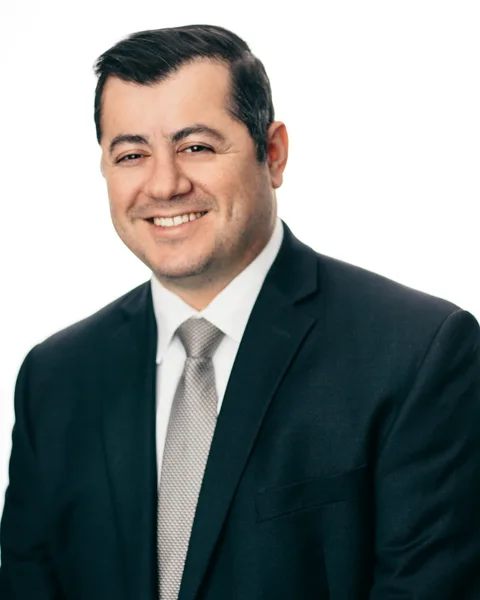
Your Attorney
Frank Younes
Every page on this site is written by Frank Younes, a Nebraska trial attorney with a published record of verdicts and settlements, selection to the National Trial Lawyers Top 100, and a practice that covers every county in Nebraska and Iowa. No case is handed to an associate — the lawyer you read here is the lawyer who works your case.
More about Frank → · Free consultation: (402) 378-9208