What happened
A five-year-old boy riding a push scooter was struck by a vehicle while crossing in a marked crosswalk at 40th and Van Dorn Streets in Lincoln on Sunday, and he remains in critical condition. Lincoln police were called to the intersection at about 11:55 a.m. Sunday, September 6. According to the Lincoln Police Department, the boy was crossing the street on his scooter, within the crosswalk, when he was hit. He suffered head injuries that police described as life-threatening and was taken to a local hospital, where he was listed in critical condition. Officers said the vehicle was not believed to have been speeding and had a green light, and that no citation has been issued. The intersection was closed while officers worked the scene, and the investigation is continuing. (1011 NOW; KLKN)
Those three facts from the police — green light, no speeding, no citation — are the whole reason this article exists, and I want to be careful with them in both directions. They are the department's preliminary account and this article does not dispute a word of them. But they are also, in my experience, exactly the facts that lead a family to believe there is nothing to be done, and that belief is frequently wrong. More on that below. As of the last reporting Sunday, the boy remained in critical condition; no outlet has published an update on his condition since, and nothing here should be read as a statement about how he is doing today.
Our condolences
There is a family in Lincoln that spent Sunday afternoon in a hospital hallway, and there is nothing anyone can write that touches that. A five-year-old on a scooter on a Sunday morning is a child doing exactly what a five-year-old does. Our thoughts and prayers are with him, with his parents, and with everyone sitting up nights with them. We are also thinking about the driver, who by every account had a green light and was doing nothing wrong when a small child came off a curb — there is no version of that morning anyone walks away from unchanged. And we are grateful to the Lincoln officers and medics who got to that intersection fast and did what they could.
Safety context
Children on foot are struck far more often than most drivers realize. In the most recent national figures, the National Highway Traffic Safety Administration's Traffic Safety Facts on pedestrians counted 7,314 pedestrians killed and an estimated 68,244 injured in traffic crashes in 2023. Within that, the share that involves kids is striking: 17 percent of all children 14 and younger who were killed in traffic crashes that year were pedestrians, not passengers.
Nebraska law puts a specific and often-overlooked obligation on drivers here, and it does not turn on who has the light. Under Neb. Rev. Stat. § 60-6,109, titled "Drivers to exercise due care with pedestrian," every driver must exercise due care to avoid colliding with any pedestrian on any roadway, must give an audible signal when necessary, and — this is the phrase that matters most in a case like this one — must "exercise proper precaution upon observing any child or obviously confused or incapacitated person upon a roadway." Separately, § 60-6,153 governs right of way in crosswalks. Neither statute says a green light ends a driver's responsibility to watch the road.
The practical caution runs to both sides of the windshield. For drivers: a child on a scooter, a bike or a skateboard closes distance far faster than a walking adult, arrives from outside the place your eyes are trained to check, and is short enough to disappear behind an A-pillar, a parked SUV or a hedge. At a green light, the temptation is to look through the intersection rather than at it. Scan the corners and the curb line, not just the signal head and the car ahead. For parents: kids under about ten genuinely cannot judge the speed of an approaching car reliably — it is a developmental limit, not a discipline problem — so the crossing rules have to be walked with them, at the actual corner, more times than feels necessary.
The rights of families after a crash like this
I have handled a lot of these cases — pedestrians struck in crosswalks — and I want to tell families what I have actually learned from them rather than what sounds good.
The first thing is that liability in a crosswalk case is almost never clear at the outset. These do not arrive with a neat police narrative assigning blame. They arrive exactly the way this one did: an intersection, a signal, a driver who says they never saw the person, and an investigation that ends without anyone being cited. Which brings me to the second thing, and it is the one that costs families the most: citations are almost never issued in these cases. A family reads "no citation" in a news story and concludes the matter is closed. It is not. Whether a driver gets a traffic ticket and whether a driver is civilly responsible for a child's injuries are two different questions, decided by different people, under different standards, for different purposes. Police issue citations when they can prove a specific traffic offense to a criminal standard, quickly, at a chaotic scene. Civil responsibility asks a broader question — whether this driver used reasonable care under these conditions — and it gets answered later, with far more information than any officer has on the morning of the crash.
That is where the green light comes in. A driver with a green light has the right of way, and that matters. But having the right of way is not a license to stop looking. Drivers have a duty to keep an eye out and pay attention for anything entering the roadway regardless of the color of the light, and Nebraska has written a version of that duty directly into § 60-6,109, including the specific instruction to take proper precaution upon observing a child. So the real questions in a case like this are not answered by the signal. They are: what was actually visible from the driver's seat, and from how far back? Was there a parked vehicle, a sign, a hedge, sun angle or an A-pillar in the way? How long was the child in the driver's field of view before impact — a second, or four? Was the driver's attention where it should have been? At what point could a reasonably attentive driver have perceived a small child at the curb and reacted?
Nobody answers those questions by reading the police report. This is why these cases typically require experts — specifically, specialists in human perception and reaction, who can establish what a driver could and should have seen and how long they had to respond, and accident reconstructionists, who can put speed, sight lines and timing on a measurable footing. That is real work and real expense, and it is the difference between a case that gets dismissed as "the driver had the light" and a case that is actually understood. I will be honest that these cases can be a battle. Insurers defend them hard, precisely because the green light and the missing citation make an attractive opening argument. But approached correctly — early, with the right experts, before the scene changes — they can absolutely be successful, and I have seen them be.
Two more things families should know. A very young child's own conduct is not measured the way an adult's would be; the law does not expect a five-year-old to exercise adult judgment about traffic, and any suggestion that a small child is simply to blame for being in a crosswalk deserves scrutiny rather than acceptance. And the evidence in these cases is perishable in a way people do not expect: signal timing data, nearby business and doorbell camera video that overwrites itself in days, the vehicle's own electronic data, and the sight lines at that corner as they existed on a September morning with the leaves still on. Those things are gettable now and largely gone in a month.
Learn more about your rights: if this touches your family, it may help to read about how pedestrian and crosswalk cases are investigated and proven, about what a claim looks like when a vehicle strikes a person, and about the work I do for injured people and families in Lincoln.
How I help families in crisis
A family whose child is in intensive care cannot go measure sight lines at an intersection, and should not be asked to. That is the part I take off their shoulders, and it is most of the job in the first two weeks.
In a case like this it means getting to that corner while it still looks the way it looked on Sunday — photographing and measuring the approach, the curb line, the parked-car positions, the signal timing and everything that blocks a driver's view of a small child. It means canvassing for video before it overwrites, sending preservation letters for the vehicle's electronic data, and getting the right experts engaged early rather than a year later when the case is in trouble. It means dealing with the insurer so the family does not have to, and making sure the medical care and the bills are being handled correctly while a child is still in the hospital.
And it means telling people the truth about what I find. Sometimes the honest answer after all that work is that the driver did everything a careful person could do and there is no one to hold responsible. Families deserve that answer straight, too. What they do not deserve is to be told the case is over because a news story said no citation was issued.
Over my career I have recovered more than $23 million for injured people and grieving families, earned countless five-star reviews from clients and endorsements from fellow attorneys, and been honored as part of a Best of Omaha personal injury team in 2025 and 2026.
If your child was hurt this way, call me and we will talk about where you actually stand — the conversation is free, you owe nothing when it ends, and if I take the case my fee comes only out of what I recover.
Frequently asked questions
- What happened in the crosswalk crash in Lincoln?
- A five-year-old boy riding a push scooter was struck by a vehicle while crossing in a marked crosswalk at 40th and Van Dorn Streets in Lincoln on Sunday, and he remains in critical condition. Lincoln police were called to the intersection at about 11:55 a.m. Sunday, September 6.
- What are the rights of families after a crash like this?
- I have handled a lot of these cases — pedestrians struck in crosswalks — and I want to tell families what I have actually learned from them rather than what sounds good. The first thing is that liability in a crosswalk case is almost never clear at the outset.
- How does Frank Younes help families after something like this?
- A family whose child is in intensive care cannot go measure sight lines at an intersection, and should not be asked to. That is the part I take off their shoulders, and it is most of the job in the first two weeks. In a case like this it means getting to that corner while it still looks the way it looked on Sunday — photographing and measuring the approach, the curb line, the parked-car positions, the signal timing and everything that blocks a driver's view of a small child.
Related coverage
Ronald Asmus, 86, Killed After a Pickup Struck Him in the Crosswalk at Broadway and 23rd Street in Scottsbluff
85-Year-Old Norfolk Man Dies After Being Struck in Fourth Street Crosswalk
30-Year-Old Man Critically Injured in Hit-and-Run at 76th and Dodge in Omaha
11-Year-Old Bennington Boy Dies After Scooter Struck by Pickup Truck Near 179th and Island Road
Your Attorney
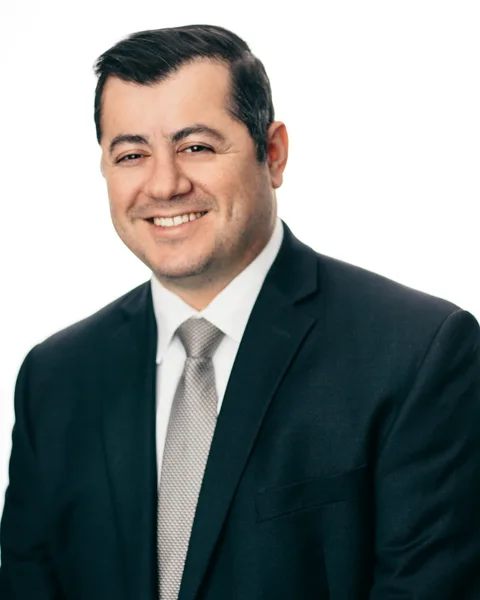
Frank Younes
Every page on this site is written by Frank Younes, a Nebraska trial attorney with a published record of verdicts and settlements, selection to the National Trial Lawyers Top 100, and a practice that covers every county in Nebraska and Iowa. No case is handed to an associate — the lawyer you read here is the lawyer who works your case.
More about Frank → · Free consultation: (402) 378-9208