What happened
A motorcyclist died Saturday night after his motorcycle and an SUV collided on 5th Avenue in Council Bluffs. According to the Council Bluffs Police Department, the crash happened at about 9:30 p.m. Saturday, September 5, in the 2700 block of 5th Avenue, near the intersection with 27th Street. The Council Bluffs Fire Department transported the rider across the river to Nebraska Medicine in Omaha, where he was pronounced dead. Police are withholding his name until his family has been notified. No other injuries were reported. The department's traffic unit is investigating and had not, as of the last reporting, said what led to the collision, which direction either vehicle was traveling, or whether any citation would be issued. (WOWT; KMAland)
That is the whole of what has been published, and this article does not go beyond it. Nothing reported so far says who had the right of way, whether either driver was turning, or what the SUV driver saw. Those are the questions the traffic unit is working, and until it speaks, no one — including this page — is in a position to say who was responsible.
Our condolences
Somewhere a family got a knock on the door late Saturday night, and by the time the sun came up Sunday their lives had been rearranged permanently. Our thoughts and prayers are with them and with everyone who loved this man. We would add a word for the driver of the SUV, who — whatever the investigation eventually concludes — will carry that night for the rest of their life, and for the Council Bluffs firefighters and the team at Nebraska Medicine who did everything that could be done.
Safety context
The mathematics of a motorcycle against an SUV are unforgiving, and the national numbers say so plainly. In the National Highway Traffic Safety Administration's Traffic Safety Facts on motorcycles, 6,335 motorcyclists were killed in crashes in 2023 — 15 percent of everyone who died on American roads that year, from a vehicle type that accounts for a small fraction of the miles driven. Measured per 100 million vehicle miles traveled, the motorcyclist fatality rate was 31.39, against 1.13 for passenger-car occupants: roughly 28 times higher. The reason is not mysterious. A rider has no steel around him. The same impact that dents a fender on an SUV can be fatal on a bike.
The practical caution for drivers is the oldest one in the book, and it still saves lives: look twice, especially before turning left across traffic or pulling out of a side street at night, because a single headlight is narrower, dimmer and harder to place at distance than a pair, and a motorcycle is frequently closer and faster than it looks. For riders on a city street after dark: assume you are invisible, cover the brake at every intersection and driveway, and ride where a driver's mirrors and eyes will actually find you rather than in the blind seam beside a larger vehicle.
The rights of families after a crash like this
When a rider dies in a collision with a passenger vehicle, the family's claim is a wrongful death claim, and it belongs to the people the law recognizes as having lost him — typically a spouse, children and parents — for the support, companionship and guidance that ended on 5th Avenue. In Iowa, a claim like that generally has to be filed within two years under Iowa Code § 614.1(2). That sounds like plenty of time. It is not, for a reason I will come to.
The harder question is responsibility, and I want to be direct about how these cases actually work. A large share of fatal motorcycle collisions with cars follow a single pattern: a driver turning or pulling into the motorcycle's path, telling police afterward that they never saw the bike. If that is what happened here — and nothing published says it is — the family's claim would run against that driver and the insurer behind the SUV, and the question would be whether a reasonably attentive driver in that position would have seen and yielded to an oncoming motorcycle. If instead the reporting develops the other way — if the motorcycle was speeding, or ran a signal, or was itself the vehicle that failed to yield — then Iowa's comparative fault rules come into play, under which a person's own share of responsibility reduces what can be recovered and, above a certain point, ends the claim altogether. Where the truth lies between those poles is unknown tonight, and will stay unknown until someone reconstructs it.
There is one thing about motorcycle cases that families rarely expect and that I have seen decide outcomes. Riders start from behind. Insurers and, frankly, juries carry an assumption that a motorcyclist was probably doing something reckless, and a claim that leads with the fact of the motorcycle rather than the facts of the collision loses ground before the evidence is even opened. The antidote is proof — the physical kind. The SUV's event data recorder holds its speed, braking and steering in the seconds before impact. The damage pattern on the motorcycle and the vehicle tells a reconstructionist the angle and closing speed. The rest positions, the debris field, any traffic or business camera on 5th Avenue, and the accounts of anyone who was there on a Saturday night all exist right now. None of it is owed to the family, and none of it waits two years.
There is also the question of coverage, which sounds mundane and is not. If the responsible driver turns out to be uninsured or badly underinsured — common in fatal cases, where the losses vastly exceed a minimum policy — the family may have a claim under the rider's own uninsured and underinsured motorist coverage, which most people do not know they are paying for and which insurers do not volunteer.
Learn more about your rights: if this touches your family, it may help to read about how motorcycle collision cases are investigated and how rider bias is answered, about what a family can recover after a loved one is killed by another driver, and about the work I do for families on the Iowa side of the river.
How I help families in crisis
A family planning a funeral cannot canvass 5th Avenue for camera footage, and should never have to. That is what I take off their shoulders.
In a case like this, the first days matter most. It means preservation letters going out immediately so the SUV and its electronic data are not repaired or released, and so the motorcycle is not scrapped before anyone has examined it. It means getting an investigator to the block while the marks and the sight lines are still there. It means requesting the police traffic unit's reconstruction when it is complete and, if necessary, commissioning our own. And it means handling the insurer — every call, every form, every request for a recorded statement — so that a grieving family does not say something in week one that gets used against them in year two.
It also means telling people the truth. Sometimes the reconstruction comes back and the honest answer is that the rider was at fault and there is no claim worth pursuing. Families deserve to hear that from someone who looked, rather than to assume it from a news story that said nothing at all.
Over my career I have recovered more than $23 million for injured people and grieving families, earned countless five-star reviews from clients and endorsements from fellow attorneys, and been honored as part of a Best of Omaha personal injury team in 2025 and 2026.
If this was your husband, your son, your father or your friend, reach out when you are ready and we will talk about what happened and what can be done — it costs nothing to ask, you are not committed to anything by asking, and if I take the case I am paid only from what I recover for you.
Frequently asked questions
- What happened in the motorcycle crash in Council Bluffs?
- A motorcyclist died Saturday night after his motorcycle and an SUV collided on 5th Avenue in Council Bluffs. According to the Council Bluffs Police Department, the crash happened at about 9:30 p.m. Saturday, September 5, in the 2700 block of 5th Avenue, near the intersection with 27th Street.
- What are the rights of families after a crash like this?
- When a rider dies in a collision with a passenger vehicle, the family's claim is a wrongful death claim, and it belongs to the people the law recognizes as having lost him — typically a spouse, children and parents — for the support, companionship and guidance that ended on 5th Avenue.
- How does Frank Younes help families after something like this?
- A family planning a funeral cannot canvass 5th Avenue for camera footage, and should never have to. That is what I take off their shoulders. In a case like this, the first days matter most.
Related coverage
17-Year-Old Motorcyclist Killed When a Turning Car Crossed Into the Teen’s Path at Highway 385 and West Third Street in Alliance
Woman Riding Motorcycle Dies After Collision With Pickup at Riverview Drive and C Street in South Sioux City
Semi Splits in Half Striking Bridge Column on I-29 Near Honey Creek, Killing Driver and Passenger
Motorcyclist, 49, Dies in Head-On Crash on Homestead Expressway North of Rosa Parks Way in Lincoln
North Platte's Dale Lake, 72, Dies in US-30 Crash Near Brady as Sturgis Rally Traffic Surges Through Nebraska
Your Attorney
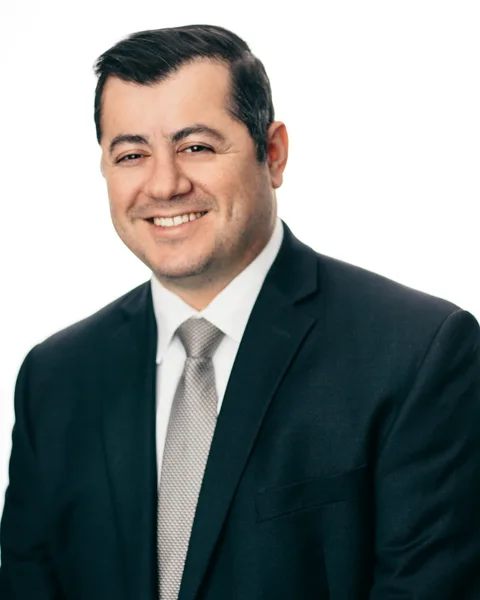
Frank Younes
Every page on this site is written by Frank Younes, a Nebraska trial attorney with a published record of verdicts and settlements, selection to the National Trial Lawyers Top 100, and a practice that covers every county in Nebraska and Iowa. No case is handed to an associate — the lawyer you read here is the lawyer who works your case.
More about Frank → · Free consultation: (402) 378-9208