Most people believe pedestrians have the right of way, full stop. Most insurance adjusters believe a pedestrian who got hit must have done something wrong. Nebraska's statute is more specific than either of them, and knowing exactly what it says is the difference between a claim that gets paid and a claim that gets blamed on the person in the hospital.
The driver's duty
Nebraska law provides that where traffic signals are not in place or not in operation, the driver of a vehicle shall yield the right-of-way to a pedestrian crossing the roadway within a crosswalk — and shall bring the vehicle to a stop to do it. That is not a courtesy. It is a mandatory duty, and a driver who strikes a pedestrian inside a crosswalk starts the case in violation of it. The statute adds a second duty that matters at multi-lane intersections: when one vehicle has stopped at a marked crosswalk to let a pedestrian cross, a driver approaching from behind may not overtake and pass that stopped vehicle. The car that swings around a stopped car and hits the pedestrian it couldn't see is the single most common serious crosswalk crash I handle, and the law already names it.
The one duty on the pedestrian
The same statute places one obligation on the person crossing: no pedestrian shall suddenly leave a curb or other place of safety and walk or run into the path of a vehicle which is so close that it is impossible for the driver to stop. Read it carefully, because insurers don't. It does not say a pedestrian must wait until the road is empty. It does not say a pedestrian who was already in the crosswalk assumes the risk. It addresses one situation — stepping off the curb directly in front of a car that has no chance to stop — and nothing else.
How the adjuster uses it anyway
Every crosswalk claim I have handled produces the same defense: the pedestrian "darted out." It is asserted whether the pedestrian was three feet from the curb or three lanes into the intersection, because Nebraska's comparative fault rules reduce a recovery by the injured person's share of fault and eliminate it entirely at fifty percent. If the insurer can put half the blame on you, it owes nothing. So the argument gets made.
The answer is evidence, gathered fast: where in the crosswalk the impact happened, which the debris field, the damage on the car and the pedestrian's rest position establish; how fast the car was going, from its event data recorder; whether there was a stopped vehicle the driver went around; and what the intersection camera or the business across the street recorded. The statute gives the driver a clear duty; the evidence shows whether it was met.
The injuries are rarely small
A person on foot has no bumper. Crosswalk crashes at ordinary city speeds produce fractured legs and pelvises, traumatic brain injuries, and, far too often, deaths — I have written this year about a Norfolk man killed crossing Fourth Street in a marked crosswalk and a five-year-old critically hurt in a Lincoln crosswalk. When a crosswalk crash is fatal, the family's claim is a wrongful death case with its own rules and a shorter deadline. In every case, the medical picture drives the value, and the value is what the "darted out" argument is designed to cut.
One practical rule: do not give the driver's insurer a recorded statement about where you were in the crosswalk. That is the question the whole case turns on, and it should be answered with evidence, not memory under stress.
Why I take these cases personally
Two of my published results are pedestrian recoveries of $300,000 each — one for a person struck in a marked crosswalk before dawn, one involving a city bus — and both were cases where the first version of events had the pedestrian at fault. As an Omaha pedestrian accident lawyer, I build these cases around the physical evidence and the driver's own data, and I try them when the insurer's offer assumes you jumped in front of a car. My clients have recovered more than $23 million, they have left many five-star reviews, and my firm was voted Best of Omaha for personal injury law in 2025 and 2026.
If a driver hit you or someone you love in a crosswalk anywhere in Nebraska or western Iowa, call me at (402) 378-9208 or reach out here. The consultation is free, and there is no fee unless I win.
Frequently asked questions
- What does Nebraska law require of a driver when a pedestrian is in a crosswalk?
- Nebraska law provides that where traffic signals are not in place or not in operation, the driver of a vehicle shall yield the right-of-way to a pedestrian crossing the roadway within a crosswalk — and shall bring the vehicle to a stop to do it. That is not a courtesy. It is a mandatory duty, and a driver who strikes a pedestrian inside a crosswalk starts the case in violation of it.
- What duty does Nebraska law put on a pedestrian crossing the street?
- The same statute places one obligation on the person crossing: no pedestrian shall suddenly leave a curb or other place of safety and walk or run into the path of a vehicle which is so close that it is impossible for the driver to stop. It does not say a pedestrian must wait until the road is empty.
- Why do insurers claim a pedestrian hit in a crosswalk "darted out"?
- Every crosswalk claim I have handled produces the same defense: the pedestrian "darted out." It is asserted whether the pedestrian was three feet from the curb or three lanes into the intersection, because Nebraska's comparative fault rules reduce a recovery by the injured person's share of fault and eliminate it entirely at fifty percent.
- Should I give the driver's insurer a recorded statement after a crosswalk crash?
- One practical rule: do not give the driver's insurer a recorded statement about where you were in the crosswalk. That is the question the whole case turns on, and it should be answered with evidence, not memory under stress.
Call Me Today at (402) 378-9208
The consultation is free, and there's no fee unless I win your case.
Call (402) 378-9208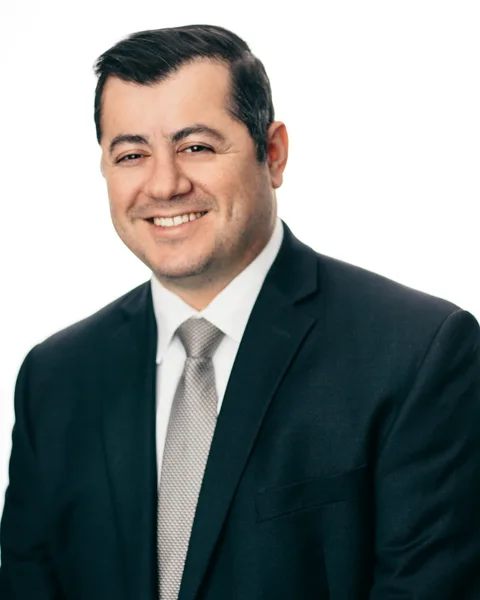
Your Attorney
Frank Younes
Every page on this site is written by Frank Younes, a Nebraska trial attorney with a published record of verdicts and settlements, selection to the National Trial Lawyers Top 100, and a practice that covers every county in Nebraska and Iowa. No case is handed to an associate — the lawyer you read here is the lawyer who works your case.
More about Frank → · Free consultation: (402) 378-9208